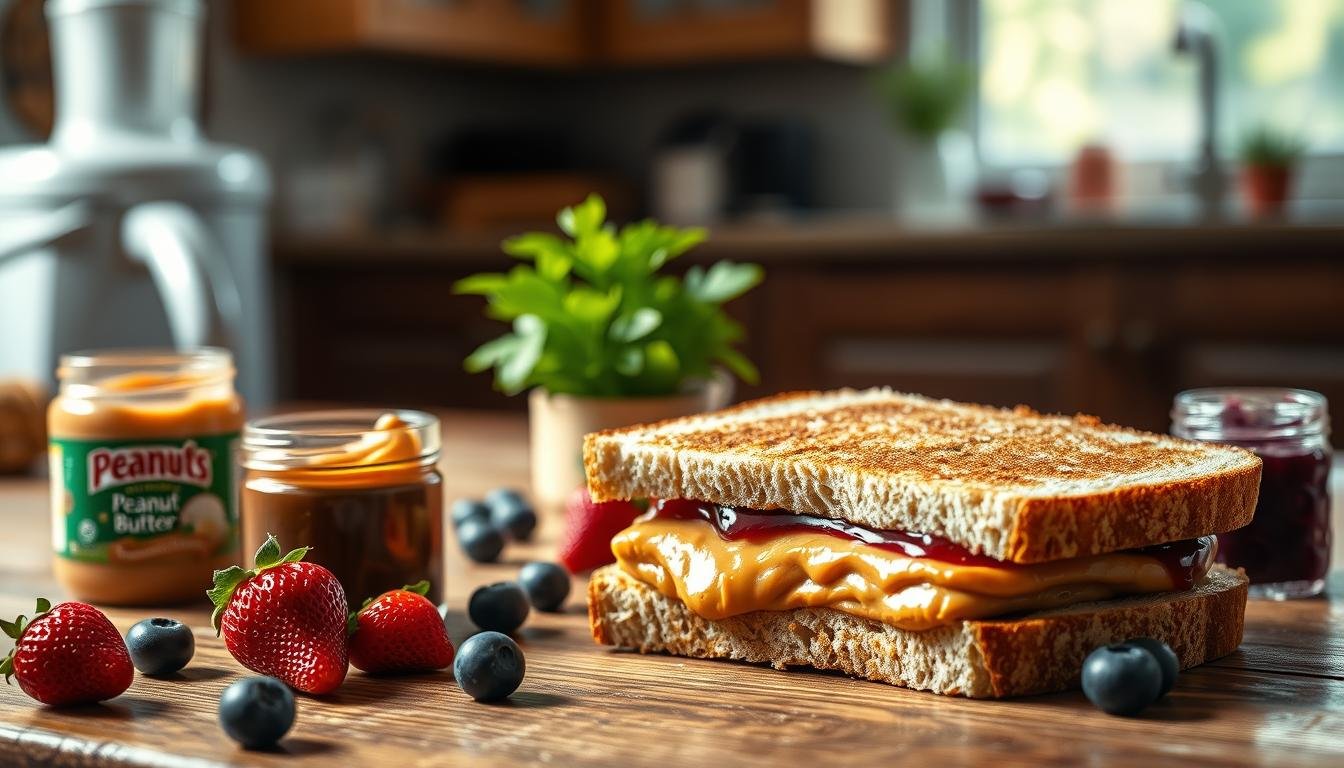
We frame this question by looking at three core parts: bread, nut spread, and fruit spread. The full sandwich and our portion size shape glycemic load, satiety, and overall nutrition.
When we choose whole-grain or sprouted bread, natural nut spread, and low-sugar jam or fruit-forward preserves, a pb&j can deliver protein, fiber, and healthy fats. We will show label tips to avoid added oils and excess sugar in spreads.
This guide previews simple swaps and add-ins like chia, flax, or fresh fruit to boost nutrient density. We also explain why sourdough may lower blood sugar spikes and how portion choices affect value as a quick meal.
Our approach is practical and family-friendly. We aim to help you build a favorite sandwich that fits daily life while supporting better nutrition and health goals.
What makes a PB&J healthy right now: breaking down bread, peanut butter, and jelly
Understanding what makes this classic meal work today starts with the loaf, the nut spread, and the fruit spread. We look at how slice choice, spread quality, and sugar content shape the sandwich’s nutritional value.
Bread basics
Whole-grain loaves keep bran, endosperm, and germ, so they deliver more fiber, protein, and micronutrients than white bread. Sprouted grain options often boost bioavailability and can add vitamin E and beta-glucan.
Fiber, protein, and glycemic impact
A simple label rule helps: aim for at least 2 g fiber and 3 g protein per slice. More fiber and protein slow sugar absorption and raise satiety. Sourdough can be a lower-glycemic fallback when high-fiber grain is unavailable.
Peanut butter nutrition
Two tablespoons provide roughly 200 calories, about 18 g fats (mostly unsaturated), and 5–7 g protein, plus vitamin E and magnesium. We advise scanning labels to avoid hydrogenated oils, palm or coconut oil, and added sugars.
Jelly vs jam vs fruit spread
Jelly uses juice, jam keeps pulp, and preserves include fruit pieces. Typical 2-tablespoon servings add ~50–60 calories from sugar; low/no-sugar varieties cut that roughly in half. Pectin in spreads may offer mild prebiotic effects, but moderation is key.
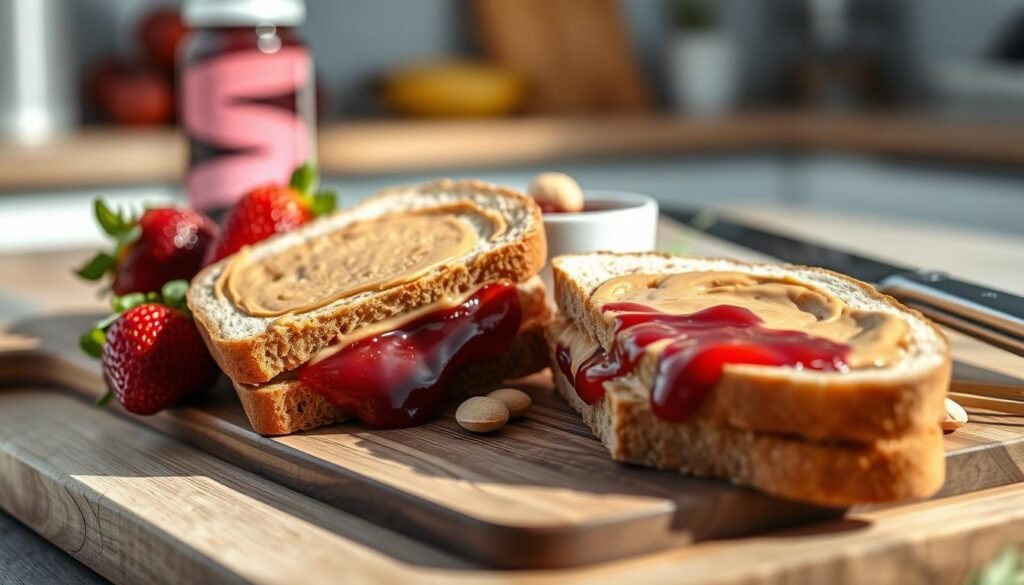
- Choose whole-grain or sprouted bread with 2g+ fiber and 3g+ protein per slice.
- Pick natural nut spread with peanuts listed first and no added oils or cane sugar.
- Favor fruit-forward spreads with no added sugar when possible.
| Type |
Fiber per slice |
Glycemic note |
| Whole-grain |
Higher (2g+) |
Lower than white |
| Sprouted grain |
Higher, more bioavailable |
Good for digestion |
| Sourdough |
Lower than whole-grain |
Often lower glycemic index |
How we build a healthier peanut butter jelly sandwich step by step
Our goal is a step-by-step plan to upgrade this lunchtime favorite without losing flavor. We focus on label reading, portion control, and simple add-ins that lift nutrients.

Choose the bread
Scan the ingredient list for “whole” as the first word. Aim for at least 2 g fiber and 3 g protein per slice.
Whole-grain or sprouted loaves are our top pick; sourdough is a lower-glycemic option when needed.
Pick the spread
Select natural peanut butter with peanuts first and no added oil or sugar. Two tablespoons usually give ~200 calories and 5–7 g protein.
We also rotate to almond or sunflower butters using the same label rules.
Smarter jam and add-ins
Choose no-added-sugar or 100% fruit spreads. Typical jelly adds ~50–60 calories per 2 tablespoons; low-sugar versions cut that roughly in half.
Sprinkle 1–2 tsp chia, flax, or hemp seeds and layer fresh fruit slices for more fiber, omega-3s, and natural sweetness.
| Component |
Key tip |
Impact |
| Bread |
Whole or sprouted; 2g+ fiber, 3g+ protein |
Slower glucose rise, more fullness |
| Nut spread |
Peanuts first; no added oil/sugar |
Healthy fats, 5–7g protein per 2 tbsp |
| Spread & add-ins |
No-added-sugar jam; seeds and fruit |
Less free sugar, more fiber and nutrients |
Are Peanut Butter And Jelly Sandwiches Healthy for different goals?
We compare how different builds of this classic sandwich match common goals like steady energy, weight control, and quick snacks.

Everyday meal or snack: protein, fiber, and healthy fats
Built with whole grain or sprouted bread, a pb&j can be a filling meal or a smart snack.
Modest layers of peanut butter supply protein and unsaturated fats that slow hunger.
Keeping portion sizes and spread amount appropriate tailors calories to activity and appetite.
Blood sugar considerations: swap fruit for jelly and mind the bread
For better glucose control, we favor whole grain or sourdough over white bread.
Limiting jelly and using sliced fruit cuts added sugar while keeping sweetness.
A thin, even layer of spread helps balance carbs with fats and protein.
- Snack: single slice or half sandwich with fruit or yogurt.
- Meal: full slices with slightly more spread and a side of produce.
- Blood-sugar focus: whole grain, modest spreads, fruit-first swaps.
| Goal |
Best choice |
Why it works |
| Snack |
Half sandwich, thin spread |
Lower calories, steady satiety |
| Meal |
Full slices, added fruit |
More energy, added nutrients |
| Blood-sugar |
Whole grain or sourdough, fruit swap |
Less free sugar, slower glucose rise |
Our takeaways to make your next PB&J a nutrient-packed favorite
We keep this simple: build a butter jelly sandwich on whole-grain or sprouted bread that lists whole grain first and hits ≥2 g fiber and ≥3 g protein per slice. Pick natural peanut butter with short ingredient lists; two tablespoons give about 200 calories, ~18 g fats (mostly unsaturated), and 5–7 g protein.
Choose no-added-sugar or 100% fruit spreads and add fresh fruit slices instead of extra jam. Sprinkle a teaspoon of chia, flax, or hemp seeds for extra fiber and omega-3s. If whole grain is unavailable, sourdough beats white bread for lower glycemic impact.
Mind portions—most pb&j builds range 350–500 calories and 45–60 g carbs—then enjoy this favorite with confidence and better nutrition value going forward.
FAQ
What makes a PB&J healthy right now: breaking down bread, peanut butter, and jelly?
We evaluate each component. Choose whole-grain, sprouted, or sourdough over white to add fiber and micronutrients. For spreads, favor nut or seed butters with minimal ingredients to get healthy fats, protein, vitamin E, and magnesium. Select fruit spreads that are fruit-forward and low in added sugar to limit empty calories and reduce rapid blood sugar spikes.
Bread basics: whole grain, sprouted grain, and sourdough compared?
Whole-grain bread typically delivers the most fiber and B vitamins. Sprouted grain often improves mineral absorption and yields more protein per slice. Sourdough can have a lower glycemic response and be easier on digestion for some people. We recommend checking fiber and protein per slice when choosing.
Fiber, protein, and glycemic impact: why slice choice matters?
The slice choice affects satiety and blood sugar. Higher fiber and protein slow digestion, lower glycemic impact, and keep us fuller longer. Aim for breads with at least 2 g fiber and 3 g protein per slice to make a meaningful difference.
Peanut butter nutrition: healthy fats, protein, vitamin E, and magnesium?
Natural nut butters provide monounsaturated and polyunsaturated fats, around 7–8 g protein per serving, plus vitamin E and magnesium. We suggest labels with only nuts and perhaps salt. Avoid products with added sugars, hydrogenated oils, or excessive seed oils that dilute nutrient density.
Jelly vs. jam vs. fruit spread: sugar, juice vs. pulp, and pectin for gut health?
Jam contains fruit pieces and tends to be slightly less processed than clear jellies, which often use fruit juice and more added sugar. Fruit spreads labeled “no added sugar” or “fruit-first” retain more fiber and real fruit. Pectin-based textures don’t add nutrition, so we focus on total sugar and ingredient simplicity for gut and metabolic health.
How do we build a healthier peanut butter jelly sandwich step by step?
Start with bread that lists “whole” as the first ingredient and meets our fiber and protein targets. Select a nut or seed butter with minimal additives. Choose a low-sugar or no-added-sugar fruit spread, or mash fresh fruit. Add boosters like chia, flax, or banana slices. Measure portions to control calories and glycemic load.
Choose the bread: what labels and numbers should we look for?
Look for “whole” as the first ingredient, 2 g or more fiber and about 3 g protein per slice. Short ingredient lists without “enriched flour” or high-fructose corn syrup are best. We also consider whole seeds or intact grains as pluses for texture and extra nutrients.
Pick the peanut butter (or nut/seed butters): how do we read labels?
Read for one or two ingredients: nuts and salt. Avoid added sugars, palm oil, and hydrogenated fats. For variety, try almond, cashew, sunflower, or tahini to change micronutrient profiles — sunflower provides vitamin E and magnesium, for example.
Smarter jelly and jam options: what should we choose?
Opt for “no added sugar” jams, preserves with a short ingredient list, or simply mash berries with a squeeze of lemon. Whole fruit spreads and fresh slices lower added sugars and increase fiber and vitamins compared with conventional jellies.
Add-ins that boost nutrition: which seeds or fruits help most?
Chia, ground flax, and hemp seeds add omega-3s, fiber, and protein without much flavor change. Fresh fruit slices like banana, apple, or berries increase vitamins, fiber, and antioxidants while reducing need for extra sweeteners.
Portioning and balance: how do we manage calories, carbs, and glycemic load?
Use about one to two tablespoons of nut butter and one tablespoon of fruit spread or an equivalent amount of fresh fruit. Pair with whole-grain bread to spread carbs across fiber and protein. This helps control calorie density and moderates post-meal glucose rises.
Are peanut butter jelly sandwiches suitable as an everyday meal or snack?
Yes, when built thoughtfully. A balanced sandwich with fiber, protein, and healthy fats can be a filling lunch or snack that supports energy and satiety. We rotate spreads and breads to keep nutrients varied.
Blood sugar considerations: how can we make a lower-glycemic version?
Choose whole-grain or sprouted bread, limit added sugars in spreads, and add protein or seeds. Replacing jelly with mashed berries or mixing fruit with a little cinnamon further lowers glycemic impact. Monitor portion sizes and pair with protein-rich foods if needed.
Are PB&J options appropriate for weight management or performance goals?
They can fit both goals when adjusted. For weight management, reduce portion sizes, pick lower-calorie spreads, and add veggies or extra fiber. For performance, increase nut butter portion or add a side of Greek yogurt to boost protein and support recovery.
What about allergies or dietary restrictions?
For nut allergies, seed butters like sunflower or soy butter provide similar textures and fats. For gluten-free needs, choose certified gluten-free whole-grain breads made from oats, buckwheat, or rice. We always check labels for cross-contact and added allergens.
Which store brands or products do we recommend checking first?
Look for reputable brands that offer natural nut butters with short ingredient lists, such as Justin’s or MaraNatha for nut butters, and fruit spreads or conserves labeled “no added sugar.” Whole-grain breads from brands like Dave’s Killer Bread or Ezekiel provide good nutrient profiles. Always read labels for current formulations.
How often should we include this type of sandwich in our meal plan?
We suggest including it a few times weekly as part of a varied diet. Rotate fillings and pairings to avoid monotony and ensure a broad intake of nutrients from other meals and snacks.
Any final tips to make our next sandwich more nutrient-packed?
Use whole-grain or sprouted slices, choose a minimally processed nut or seed butter, swap high-sugar jelly for mashed fruit or no-sugar-added spreads, and add seeds or fresh fruit. Simple swaps deliver better fiber, more protein, and fewer added sugars without sacrificing taste.