Difference Between Fast Food And Fast Casual
We introduce this guide to clarify how two quick-service models serve customers and shape the restaurant industry. Our aim is to make the key differences easy to scan so readers can pick what matters most.
One side focuses on speed, low price, and consistency through standardized menus and drive-thru lanes. The other blends quick service with higher-quality ingredients, more customization, and a relaxed dining experience.
We note market signals: both segments are growing, with strong projections for quick-service chains and for the premium casual segment. That growth changes how operators choose concepts and how customers decide where to eat.
This section sets expectations for the rest of the guide. We will compare service styles, menu makeup, average check size, and ambiance so you can weigh options as a diner or a restaurant planner.
What we mean by fast food vs. fast casual today
We map how modern quick‑service models diverge in speed, comfort, and menu choices across U.S. restaurants.
In one model, franchises prioritize speed and low cost. Their menus use standardized prep and premade ingredients so customers move through lines fast. Seating and layout favor quick turnover and minimal friction.
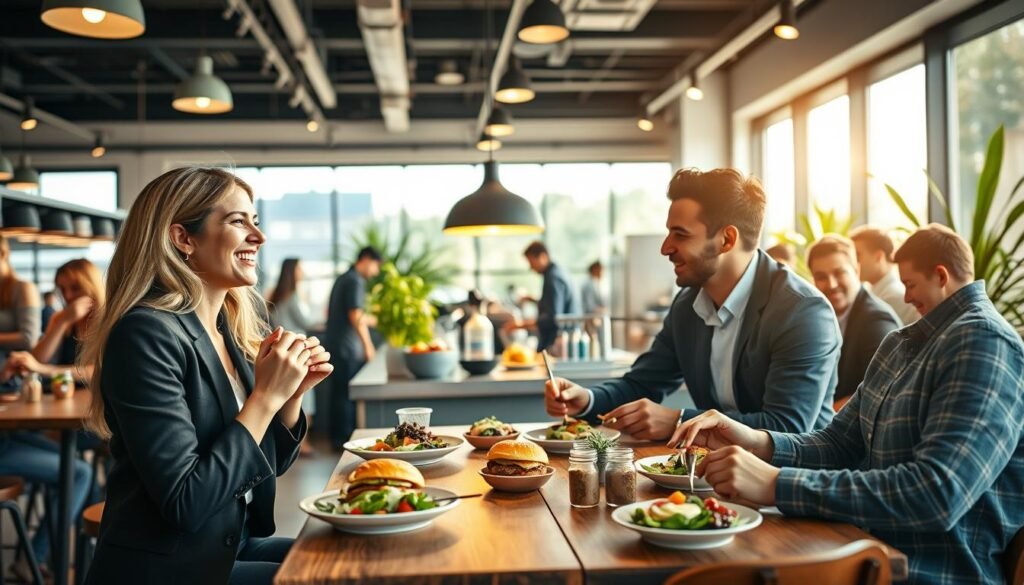
The other model blends quick service with a relaxed atmosphere. Fast casual concepts offer fresher options, more customization, and interiors that invite lingering. Think cushioned booths, reliable Wi‑Fi, and warmer design that changes the dining experience.
- We define the first as the quick, cost‑focused branch that optimizes throughput and simplicity.
- We define the second as a newer approach that balances convenience with higher‑quality food and comfort.
- Both operate inside the same restaurant industry, but they diverge on service style, menu choices, and perceived value.
These types evolved as the market shifted toward convenience and quality. Next, we compare sourcing, service flow, and operations that set them apart today.
Difference Between Fast Food And Fast Casual
We outline how two quick-service formats shape menu design, service flow, and customer expectations in today’s restaurant market.
How fast food is defined in the restaurant industry
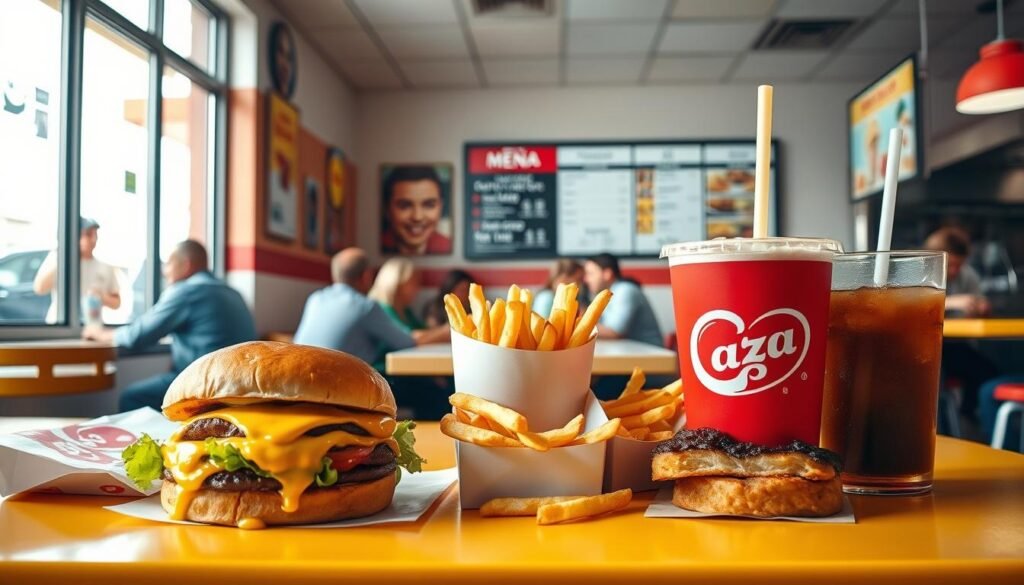
We treat fast food as the QSR model built for speed and low price. Standardized menus, drive‑thru lanes, and long hours drive throughput.
Limited menus reduce prep complexity. That supports low labor and steady, fast ticket times at many fast food restaurants.
How fast casual blends quick service with casual dining
Fast casual uses counter formats and assembly-line ordering to let customers customize orders. Ingredients are often fresher and menu options expand.
Design touches, partial table service, and occasional alcohol menus create a more comfortable dining experience than typical fast food.
Where QSR and FSR fit into the dining landscape
- QSR: streamlined service, low average checks, standardized operations.
- Fast casual: faster ticket times with more ingredients and personalization.
- FSR: full table service, larger menus, higher expectations for ambiance and staff service.
Service models and speed: counter, assembly line, and drive‑thru realities
We look at how counters, assembly lines, and drive‑thru lanes shape the pace of service in restaurants.
Ordering and fulfillment: standardized counters vs. custom assembly lines
Standardized counters in fast food restaurants simplify ordering and fulfillment. Staff follow set steps so orders move fast and errors fall.
By contrast, fast casual often uses visible assembly lines where customers build bowls or salads. That model trades some speed for personalization and choice.
Throughput, hours of operation, and drive‑thru convenience
Drive‑thru lanes give fast food unmatched convenience. Dedicated lanes, headsets, and menu boards keep cars moving, which boosts throughput and supports late‑night hours.
Many fast casual restaurants focus on lunch and early dinner. They rely on counter staff, limited runners, and staging to keep orders accurate without a drive‑thru.
- Order batching and expo roles reduce mistakes during peak times.
- Labor shifts align to counter, line, and pickup duties to manage wait times.
- Customers expect seconds in a drive‑thru but accept a minute more for made‑to‑order meals.
| Feature | Fast Food | Fast Casual | Impact on Customers |
|---|---|---|---|
| Primary ordering | Standard counter / kiosks | Counter + assembly line | Speed vs. customization |
| Drive‑thru | Common; high throughput | Rare | Convenience gap at night |
| Hours | Late night / 24‑hour options | Daytime peak (lunch/dinner) | Availability varies by need |
| Staffing focus | Speed and accuracy training | Line cooks and food runners | Different wait time profiles |
Menu, ingredients, and pricing: quality trade‑offs customers notice
Our focus here is how ingredient choices and menu design change the perceived value of a meal in different quick‑service formats.
Ingredient sourcing and prep
Many fast food kitchens use frozen or prepackaged components to keep cost and prep time low. That supports consistent orders and rapid ticket times.
By contrast, fast casual concepts often grill, hand‑assemble, and use higher-quality ingredients that need more prep time. The Five Guys versus Burger King example illustrates this: hand‑formed patties versus frozen patties shape both taste and expectations.
Customization and healthier choices
Menus in fast casual restaurants expand options like whole grains, greens, and lean proteins. Custom assembly lines let customers adjust portions and swap ingredients without slowing service too much.
This flexibility makes plant-based, gluten‑conscious, or low‑carb trends easier to support than on tightly engineered fast food menus.
Price points, perceived value, and loyalty
Average checks differ markedly: about $5 at many fast food outlets versus roughly $12 at fast casual spots (FranchiseHelp). Customers accept higher prices for freshness, variety, and control over their meal.
- Menu strategy: simplified offerings for throughput vs. broader menus for personalization.
- Ingredients: frozen/premade components vs. fresh prep and grills.
- Orders and portioning: standard portions aid predictability; flexible portions boost perceived value.
| Feature | Typical fast food | Typical fast casual |
|---|---|---|
| Primary ingredients | Frozen/premade | Fresh, higher-quality ingredients |
| Average check | $5 | $12 |
| Health-forward options | Limited | Broader choices |
Atmosphere and design: from utilitarian to “everyday oasis”
We focus on how design decisions turn a quick meal into either a brief stop or a place to linger. Atmosphere guides how customers use restaurants and what they expect from service and menus.
Fast casual ambiance: modern décor, open kitchens, and lingering
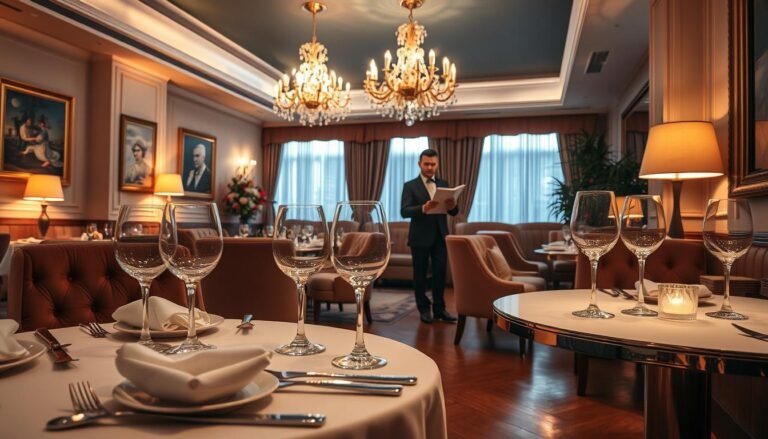
In many fast casual spots, we see modern décor, warm lighting, and cushioned seating that invite longer visits. Open kitchens add transparency and signal fresher prep, which raises the perceived experience.
Fast food interiors: efficiency first, with recent refreshes
Fast food focuses on durable surfaces and layouts that speed cleaning and turnover. Still, chains update palettes and add digital menus to meet evolving customer expectations without slowing operations.
- Table layout and acoustics influence whether customers work, socialize, or dine quickly.
- Small touches—art, plants, music—boost casual dining vibes without harming throughput.
| Feature | Fast casual | Fast food |
|---|---|---|
| Seating | Comfortable booths, mix of tables | Hard seats, compact tables |
| Design cues | Warm materials, open kitchen | Durable finishes, digital menus |
| Customer intent | Stay longer, work or socialize | Quick turnover, grab-and-go |
Design supports the core service promise in every restaurant we study. Thoughtful atmosphere and layout shape comfort, flow, and how customers value the visit.
Technology and convenience: online ordering, delivery, and loyalty
We examine the digital workflows that let customers order, track delivery, and redeem loyalty rewards with ease.
Digital ordering systems, kiosks, and contactless payments
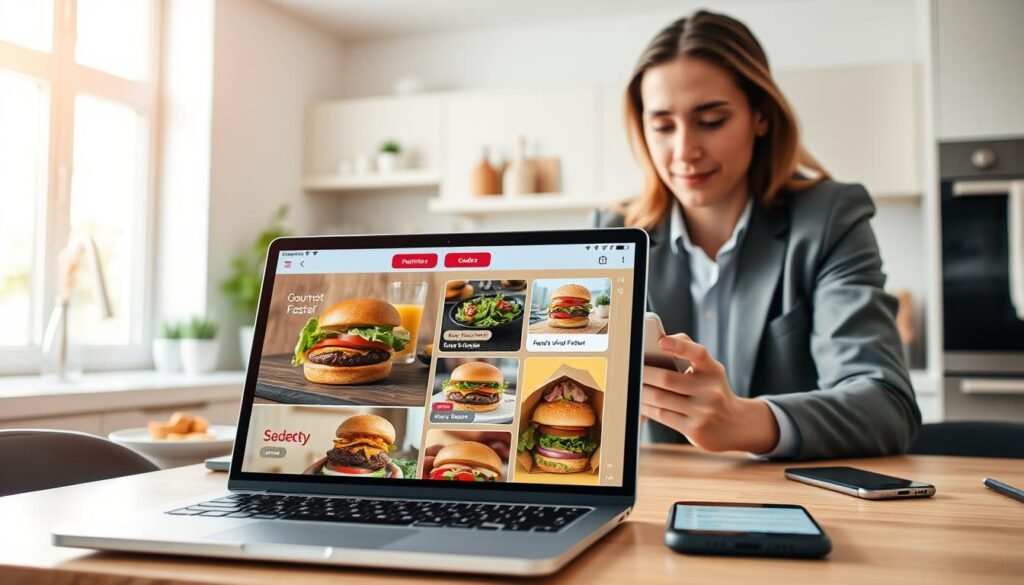
Both fast food and fast casual restaurants use online ordering systems on websites and apps. QR code menus and kiosks cut queue time and reduce errors.
Contactless payments and clear signage make pickup and curbside handoffs smoother for customers and staff.
Delivery and pickup flows: app integrations and tracking
Marketplaces and in‑house apps route delivery orders and show real‑time status. Reliable ETAs and tracking are now expected service elements.
Well‑designed pickup shelves, handoff windows, and staging areas keep off‑premise orders from disrupting dine‑in service.
Loyalty programs that drive repeat visits
Loyalty platforms capture order history and reward repeat visits with points or personalized offers. Saved favorites and one‑tap reordering lift conversion and average order value.
- Digital ordering and kiosks reduce friction and improve accuracy.
- Contactless options and QR codes are baseline convenience features.
- Delivery integrations provide tracking and broader reach for restaurants.
- Loyalty systems increase visit frequency and support unit economics.
| Feature | How it works | Impact on restaurants |
|---|---|---|
| Ordering channels | Apps, web, kiosks, QR menus | More orders, reduced line time |
| Delivery | Third‑party + in‑house apps with tracking | Expanded reach, need for pickup staging |
| Loyalty | Points, offers, saved favorites | Higher retention, larger checks |
Operations and business models: standardization, franchising, and scale
We outline the operational engines that let restaurant concepts expand while keeping quality predictable.
Consistency across locations, franchise dynamics, and market growth
Standardized processes and clear playbooks keep service steady in many chain restaurants. Training, checklist audits, and central recipes reduce variation across units.
Fast food restaurants tend to rely heavily on franchising to scale. That model boosts unit counts and makes procurement efficient.
- Fast casual blends franchised units with independents and allows limited local menu changes.
- Central buying and equipment packages lower COGS and stabilize throughput.
- Digital loyalty and ordering inform day‑part menus and boost repeat visits.
| Operational lever | Fast food | Fast casual |
|---|---|---|
| Franchise mix | High; large networks | Moderate; franchises + independents |
| Growth (2021–2026 / 2021–2028) | $972.74B→$1,467.04B (CAGR 6.05%) | +$186.27B (CAGR 12.41%) |
| Profit drivers | Labor efficiency, speed, scale buying | COGS control, menu mix, premium pricing |
In our view, investors back both models: mass scale for food restaurants and rapid expansion for premium quick service concepts. Operational rigor, not just menu ideas, separates durable establishments from short‑lived trends in the restaurant industry.
Who each format serves best: use cases, occasions, and examples
We break down common occasions and match them to the right quick-service model using real brand examples. This helps customers pick the best spot for time, budget, or taste.
When speed and low cost win
For commuters, late-night runs, and family value meals, fast food shines. Brands like McDonald’s, Burger King, and Taco Bell deliver quick orders through drive-thru lanes and simple menus.
These fast food restaurants focus on craveable classics, low prices, and rapid pickup. If convenience and a low cost matter most, this format fits the bill.
When quality and customization matter
When customers want higher-quality ingredients or build-your-own bowls, fast casual is the better choice. Panera, Chipotle, Shake Shack, and Sweetgreen cater to younger diners and people who linger.
Fast casual spots expand menu options and offer counter pickup or dine-in seating. Delivery is available for both formats, but the dining experience and customization steer many to fast casual.
| Use case | Best for | Example brands |
|---|---|---|
| 3‑minute commuter pickup | Speed & low cost | McDonald’s, Taco Bell |
| Study session or lunch meeting | Comfort & customization | Panera, Chipotle |
| Health‑focused seasonal meal | Quality ingredients | Sweetgreen, Shake Shack |
How we guide your choice in the current market context
We present a clear action plan that helps you match concept, menu, and systems to local demand and margins.
We recap key differences operators should weigh: menu complexity, ingredients, service design, and speed versus convenience. Both segments rely on standardized processes, digital ordering, and loyalty to drive repeat visits.
Align prices and cost structure to neighborhood income, traffic patterns, and delivery potential. Size kitchens and tech systems to the experience you promise—drive‑thru‑first setups need different flows than digitally fluent counter models.
Prioritize convenience or quality cues for your core customers, then test bundles, LTOs, and day‑part menus to protect margins. If seconds saved and value pricing are paramount, choose the low‑check path; if customization and a richer dining experience matter, opt for the premium quick model.