History Of Craft Beer
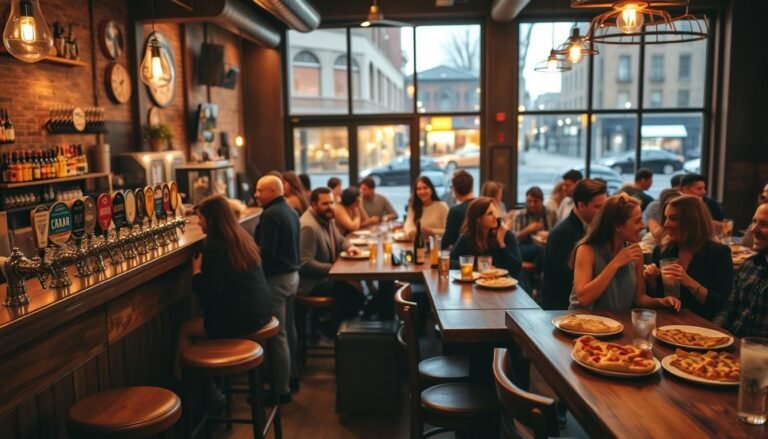
We open with a sweep from ancient brewing rites to the modern craft era, tracing how early recipes and local practices shaped what people drink today. The account begins with the Hymn to Ninkasi and moves through laws like the Bavarian Reinheitsgebot to the U.S. Prohibition, each moment shifting how breweries operated and how beer reached cups.
We explain why these turning points mattered to brewing and to the beer industry. Small brewery traditions influenced flavor and technique. Later consolidation narrowed choices, setting the stage for a revival driven by taste and innovation.
Our guide maps key moments, highlights how brewers and brewing companies responded, and shows how the number and role of craft breweries changed the market in the United States. We preview how the brewers association and others helped shape definitions that now guide brewers and drinkers alike.
Why the History Of Craft Beer Matters to Today’s Drinkers and Brewers
Understanding earlier shifts in brewing helps us read current trends and make smarter choices as brewers and drinkers. Past innovations and setbacks shaped flavor expectations and the market for distinctive beer in the United States.
We see how consolidation narrowed options, and how that pushed demand for authenticity. That context helps a brewery position its beers and story. The Brewers Association’s evolving definition gives brewers a clear way to explain scale, ownership, and method to people who care about provenance.
Historical perspective also guides practical planning. By studying movement milestones, we can predict style waves, distribution pressures, and the cycles the industry faces. That knowledge helps brewers balance creativity with discipline.
- Consumers use history to pick beers that match values like locality and transparency.
- Brewers use past lessons to craft brands, choose channels, and defend access.
- The u.s. craft ecosystem grew by learning from success and misstep—offering a realistic playbook.
From Ninkasi to Reinheitsgebot: Deep Roots Before the Craft Revolution
From temple offerings to tavern tables, early brewers developed methods that echo in today’s small breweries. We trace how ritual, daily life, and local need shaped brewing long before modern business models and the united states scene emerged.
Ancient hymns and early brewing traditions
The Hymn to Ninkasi, around 1800 BC, records a practical recipe and the reverence given to fermented grain drinks. That text shows brewing served ritual, nutrition, and local trade roles.
Centuries later, Heinrich Knaust cataloged about 150 beers in 1573, proving variety existed well before contemporary craft beer claims. Early traditions traveled and mixed, seeding different brewery techniques across regions.
1516 Bavarian purity law and its long shadow
The 1516 Reinheitsgebot limited ingredients to barley, hops, and water. Its simplicity set consumer expectations and influenced market preferences for centuries.
While many brewers later pushed boundaries, purity rules shaped which grains and methods were favored. That tension—tradition versus innovation—helps explain why modern craft often cites historic styles.
- Early documentation shows brewing was both sacred and practical.
- Variety existed long before consolidation narrowed choices.
- Purity laws influenced long-term market expectations and recipe limits.
| Year | Event | Impact |
|---|---|---|
| c.1800 BC | Hymn to Ninkasi | Recorded recipe and ritual role |
| 1516 | Reinheitsgebot | Defined simple ingredient standards |
| 1573 | Knaust catalog | Documented wide variety of beers |
American Beer’s Turning Points: Taverns, Industrialization, and Prohibition
Tavern life in colonial towns anchored social, commercial, and brewing routines across the colonies. Inns were civic hubs where people met, traded, and drank local brews. The Wayside Inn, opened in 1716, still stands as a living link to that era.
Colonial inns and early U.S. beer culture
Early taverns supported local breweries and kept brewing knowledge close to community needs. Brewers supplied inns and taverns, and recipes passed between neighbors.
- Inns shaped demand and taste for local beers.
- They helped distribute small batches before large-scale distribution existed.
- Community ties later influenced the taproom and local brewery model.
1919–1933: Prohibition, 3.2% beer, and repeal
Prohibition began after ratification in 1919 and took effect January 16, 1920. Many breweries closed or pivoted to soda, near beer, or other products.
On March 23, 1933, Congress allowed 3.2% beer as a temporary relief. The 21st Amendment repealed national prohibition on December 5, 1933, but left states with varied rules that shaped future brewery growth.
| Year | Event | Result |
|---|---|---|
| 1716 | Wayside Inn opens | Local brewing continuity |
| 1920 | Prohibition enacted | Many breweries repurposed or closed |
| 1933 | 3.2% legal & repeal | Patchwork state rules shaped market |
Consolidation and Homogenization in the 20th-Century Beer Industry
Mechanization, national distribution, and mass marketing reshaped brewing, leaving far fewer independent breweries by midcentury.
Why breweries disappeared: technology, distribution, and advertising
Automation and new packaging cut per-unit labor but raised the scale needed to compete. Refrigerated logistics favored bottom-fermented lagers that required bigger tanks and steady volume.
Rising advertising costs gave national brands a huge advantage on radio and TV. Small brewers found it hard to match that spend and many exited or sold.
Fewer breweries, milder lagers, and global multinationals
International mergers concentrated portfolios. Companies such as AB InBev, SABMiller, Heineken, and Carlsberg standardized products and tightened distribution networks.
- Automation and cold chains reduced the number of local breweries.
- Lager economics pressured small brewery survival and acquisition.
- Mass media advertising reinforced national brands and milder beers.
| Region | Peak | Later Count |
|---|---|---|
| Belgium | 3,000+ (1900) | 143 (1980) |
| United States | 421 (1947) | 10 macrobreweries (2014) |
| Global | Many local firms | Dominant multinationals by late 20th century |
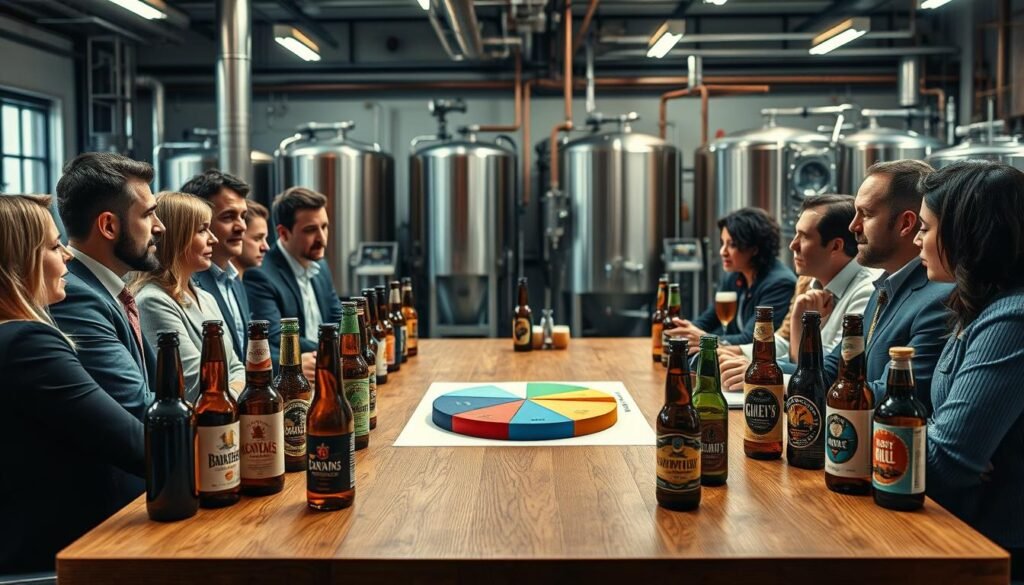
This consolidation narrowed flavor ranges and set the stage for later debate over definition. It also created the space where craft beer and new craft breweries could later regain growth and diversity.
Anchor Brewing Company and the Spark in San Francisco
In 1965 a single investment in San Francisco kept an old brewery alive and quietly reshaped what American drinkers would soon expect. We trace how that rescue helped signal a different path for craft brewing in the united states.
Fritz Maytag’s 1965 purchase and revival
Fritz Maytag bought Anchor Brewing Company when the firm teetered on closure. He poured capital into equipment and process control.
Maytag focused on consistency and distinctive recipes. That hands-on approach turned Anchor Brewing into a model for how a small brewery could run as a viable business.
How one brewery helped ignite a national movement
Anchor’s flavorful beers contrasted with the era’s mild lagers. The brewing company drew attention from early brewers, journalists, and drinkers.
- It preserved tradition while pushing innovation.
- It showed that quality-focused operations could find a market.
- It inspired other craft breweries to scale thoughtfully.
| Year | Event | Impact |
|---|---|---|
| 1965 | Maytag buys Anchor | Revival of a San Francisco brewery |
| Late 1960s | New beers released | Raised interest in flavorful beer |
| 1970s | Peers emerge | Movement momentum across the united states |
The 1970s Homebrewing Wave and the Birth of Microbreweries
The 1970s sparked a hands-on movement where hobbyists moved from kitchen experiments to licensed brewing ventures. Homebrewing laws changed how we learned recipes and scaled technique. That shift created the talent pipeline and demand that fueled early microbreweries.
Legalizing homebrewing and empowering small brewers
When lawmakers decriminalized homebrewing, we saw more people test recipes and share methods. Amateur brewers gained practical skills in sanitation, mash schedules, and yeast care. That knowledge gave small brewers the confidence to open licensed operations and start a new business model.
From garages to nanobreweries and brewpubs
Many early operations began in garages or tiny industrial bays. Nanobreweries ran low-capital operations with minimal tanks and manual packaging. A taproom-first approach let us build local markets and get instant feedback on beers.
Legal changes also enabled brewpubs to thrive. After California passed AB 3610 (1982), Buffalo Bill’s opened in 1983 and showed how direct sales with food sped recipe development and loyalty. Limited tank space and tight cash flow forced pragmatic growth decisions and disciplined brewing calendars.
| Year | Event | Impact |
|---|---|---|
| 1970s | Homebrewing legalized | Skills moved from hobby to operation |
| 1982 | CA AB 3610 | Allowed direct sales with food, enabling brewpubs |
| 1983 | Buffalo Bill’s opens | Model for taproom-driven growth |
Microbreweries and nanobreweries relied on community support to grow. We built brands around local taste and taproom service. Those early choices shaped later market growth and the way many craft breweries operate today.
Defining Craft: Brewers Association Standards and Real-World Nuance
To sort labels and meet consumer expectations, trade groups set technical lines that shape how we call a small brewer today. Clear definitions help retailers, regulators, and drinkers navigate a crowded market and compare breweries across regions.
Small, independent, traditional—what the Brewers Association means
The Brewers Association frames a craft brewer with three pillars. Small means under 6 million barrels per year. Independent means less than 25% owned or controlled by a non-craft alcohol company.
Traditional means that over half of volume comes from beers whose flavor comes from traditional or innovative brewing ingredients and fermentation. This keeps the focus on brewing methods, not just marketing.
Barrels, national caps, and practical gray areas
Barrel thresholds spark debate because markets differ. For example, Italy’s cap sits near 200,000 hectoliters (about 170,502 barrels). National limits reflect scale and market size, so direct comparisons need context.
Contract brewing, alternating proprietorships, and collaborations create gray areas. Ownership stakes, transparency, and where beer is made all affect classification in real-world cases.
- Definitions give small brewers a way to signal independence and values.
- Ownership rules protect the term for genuinely independent breweries.
- International comparisons require converting units and reading local law.
| Criterion | U.S. Threshold | Example (Italy) |
|---|---|---|
| Size | < 6 million barrels | ~170,502 barrels (200,000 hl) |
| Independence | < 25% outside ownership | Similar ownership tests apply |
| Traditional | 50%+ flavored by brewing | Interpreted locally |
Microbreweries, Nanobreweries, Farm Breweries, and Brewpubs Explained
We look at how size and site shape a brewery’s license, sales, and guest experience. Different models set expectations for food, packaging, and on-site service.
Production limits, on-site sales, and taproom models
Microbreweries commonly produce under 15,000 U.S. barrels a year. The term also signals flexibility and a focus on local customers.
Nanobreweries are much smaller. Many begin in garages or tiny units and sell directly to nearby bars and neighbors.
Farm breweries earn agricultural privileges when they use farm-grown ingredients. That link to local grain or hops ties brewing to terroir.
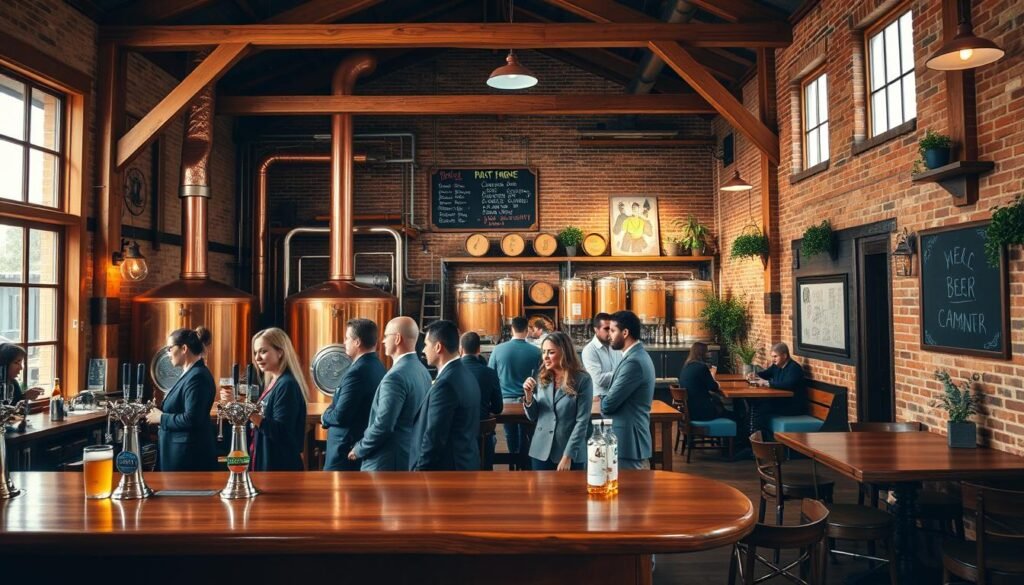
In the united states, a brewpub typically sells 25% or more of its beer on-site with substantial food service. Taprooms sell on-site without heavy food. A brewing company can combine models—production facility plus a taproom or brewpub—to match zoning and market needs.
- Barrels and thresholds guide capacity planning and tax choices.
- Model choice affects distribution, branding, and visitor expectations.
| Type | Typical annual barrels | On-site sales |
|---|---|---|
| Microbrewery | <15,000 | Varies; taproom common |
| Nanobrewery | <1,000 | Mostly local, direct sales |
| Farm brewery | Small to mid | On-site plus farm sales |
| Brewpub / Taproom | Varies | 25%+ on-site (brewpub with food) |
Timeline of U.S. Craft Growth: 1960s Origins to Today’s Diverse Market
We use a decade-by-decade timeline to show how a small spark in the 1960s became a broad, varied market. This view highlights legal shifts, stylistic influences, and the role of taprooms in scaling interest.
1970s–1990s: real ale influence, microbrew boom, and early brewpubs
Real ale culture from the U.K. inspired American brewers in the 1970s. Homebrewing skills turned hobbyists into licensed microbreweries in the 1980s.
Early brewpubs, like Buffalo Bill’s in 1983, proved direct-to-guest sales built community and sped recipe work. By 1985, the first time craft brewers outnumbered macrobrewers in the united states (37 vs. 34). That milestone signaled a lasting shift in brewery counts and market attention.
2000s–present: explosive number of breweries and style innovation
The 2000s brought rapid growth. Microbreweries and new taproom models multiplied, pushing styles and local discovery. Breweries climbed into the thousands; today there are over 3,500 in the u.s. craft sphere.
Definitions and million barrels thresholds gained importance as brewers scaled. The brewers association metrics helped categorize makers for reporting and distribution in an evolving beer industry.
| Years | Milestone | Impact |
|---|---|---|
| 1970s–1980s | Homebrewing spread | Skills moved into licensed microbreweries |
| 1983–1985 | First modern brewpubs & count milestone | Community sales and market momentum |
| 2000s–Today | Explosive brewery number | Style innovation and taproom growth |
Consumer Demand Transformed: Variety, Income, and Communities
Postwar prosperity opened wallets and curiosity, creating a market hungry for new flavors and small producers. We saw consumers trade uniform mass brands for distinct local options and novel tasting notes.
From homogenized lagers to flavor-driven options
As incomes rose, many people were willing to pay more for memorable drinks. This shift let small breweries experiment with hops, malts, and fermentation to craft bolder profiles.
Microbreweries and brewpub operations found room to grow by offering unique menus and limited runs. Those direct sales helped refine products fast.
CAMRA and consumer associations shaping tastes
Groups like CAMRA championed real ale and taught people to value quality over sameness. That advocacy inspired similar clubs and online forums in the united states.
Festivals, tasting clubs, and social media created feedback loops. Brewers used that input to tune recipes, speeding growth and deepening local followings.
- Demand for variety encouraged premium trade-ups and niche segments.
- Community models—taprooms, festivals, clubs—built loyal buyer bases.
- The wider industry began to accept that small producers could shape long-term market trends.
| Driver | Effect | Example |
|---|---|---|
| Rising incomes | Premium purchases | Small-batch releases |
| Consumer advocacy | Taste education | Real ale campaigns |
| Local venues | Faster feedback | Taproom-driven growth |
Tools of the Trade: Equipment, Capital, and Knowledge Networks
Scaling small operations demanded practical solutions. We adapted secondhand tanks, sealed kegs by hand, and packed bottles on folding tables. Those early workarounds kept the first breweries alive while demand grew.
How small brewers scaled up with new gear and financing
As the market matured, suppliers began making craft-scale systems. Purpose-built fermenters, compact canning lines, and modular cellars replaced repurposed dairy vats. That gear improved consistency and cut labor time.
Financing followed many paths. Community loans, local banks, crowdfunding, and a few venture investors all helped move start-ups from pilot to production. Public incentives for local grain and hop sourcing tied farms to regional supply chains.
- Knowledge networks and guilds shortened learning curves and raised quality.
- Contract brewing let teams grow volume without big capital outlay.
- Barrels and cellar planning set cadence for seasonal releases and aging programs.
| Tool | Benefit | Typical Use |
|---|---|---|
| Repurposed tanks | Low cost | Pilot batches |
| Craft-scale fermenters | Consistency | Year-round production |
| Crowdfunding / loans | Community buy-in | Taproom expansions |
Combined, these tools professionalized the industry. We grew in number while holding local identity and keeping brewing craft at the center of our business choices.
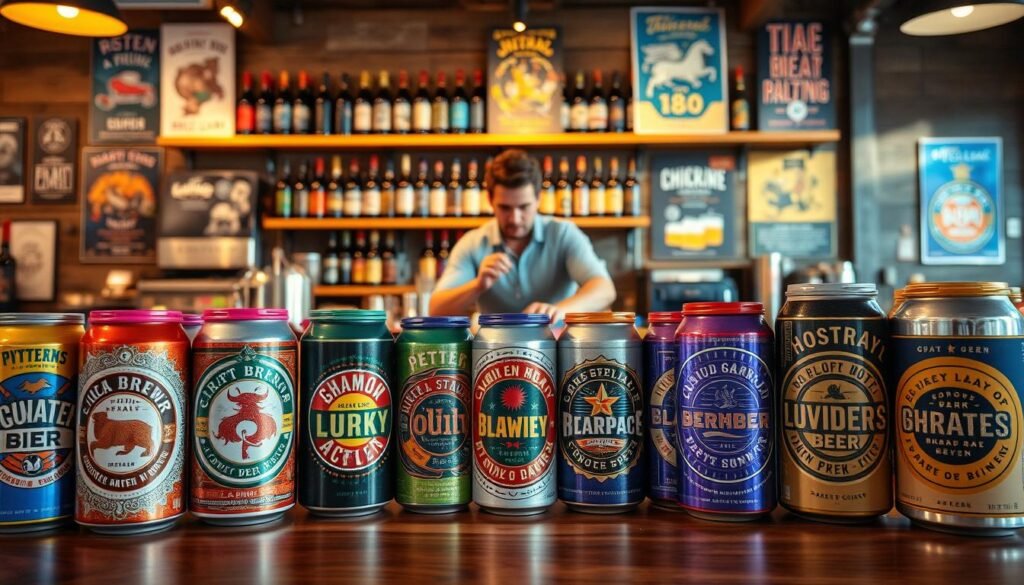
Packaging and Presentation: Cans, Kegs, and Design as Strategy
Packaging choices shape how a brewery connects with customers before a can or keg is opened. The right format protects flavor and helps a brewing company stand out on crowded shelves.
Cans surged because they block light and limit oxygen better than bottles. They chill faster, save shelf and truck space, and allow full-wrap artwork that builds brand impact.
Mobile canning, design, and brand strategy
Widespread adoption followed better mobile canning rigs, more reliable seamers, and improved supply access for smaller breweries. Between 2012 and 2014, use of cans among U.S. craft breweries doubled, with 500+ companies canning.
- Design canvases let us create series, seasonal labels, and variety packs that sell on sight.
- Mobile canning reduces capital needs and lowers minimum order hurdles for small operations.
- Polymer linings in modern cans prevent metallic taste while keeping beer fresh.
Operational decisions still matter. We weigh minimum order quantities, storage needs, recycling logistics, and supplier lead times before committing to a format. Kegs remain vital for taproom service and draft distribution, while cans handle retail and portability.
For aroma and flavor, we recommend pouring into a glass. This practice showcases hop character and head retention and corrects old prejudices about canned quality.
| Format | Protection & Cooling | Best use |
|---|---|---|
| Cans | Excellent light/oxygen protection; fast chilling | Retail, outdoor, variety packs, limited runs |
| Kegs | Good protection; ideal for bulk draft service | Taprooms, bars, events |
| Bottles | Moderate protection; aesthetic appeal | Special releases, cellared ales |
Barrels, Sours, and Innovation: The Rise of Specialty Craft Beers
Barrel programs reshaped what we expect from small-batch brewing, turning slow experiments into headline releases. We trace how wood, time, and blending moved from sideline trials to core innovation at many breweries.
Goose Island first made Bourbon County Stout in 1992; by 2005 it was a regular, widely watched release. That moment helped normalize long cellaring and spirit-barrel aging across the craft beer world.
Bourbon barrels and how wood changes flavor
Barrels add spirit character, gentle oxidation, and tannin. Micro-oxygenation softens harsh notes and creates layered complexity.
- Blending balances young and aged lots to smooth extremes.
- Time in wood means evaporation losses and patient sensory panels to judge readiness.
- Cellar discipline, safety, and clear labeling keep large programs manageable.
Belgian sour methods, American hops, and new directions
American brewers adapted Belgian lambic and Flanders techniques—mixed fermentation, foeders, and fruit additions—and combined them with local hops and yeast. That hybrid approach created sour releases with distinct regional signatures.
| Attribute | Barrel-Aged Stouts | Sour / Mixed-Ferment |
|---|---|---|
| Primary effect | Spirit notes, tannin | Acidity, funk |
| Key tools | Bourbon/rum barrels, blending | Foeders, wild yeast, fruit |
| Operational focus | Evaporation, sensory panels | Sanitation, aging schedule |
Specialty drops created hype cycles and trading communities that broadened the market. We note that disciplined cellar work and transparent labeling help these releases reach consumers safely and consistently.
Macrobrewers Respond: Craft-Style Lines, Acquisitions, and Distribution Power
As independent breweries gained footholds, national brewers adopted new labels and acquisition playbooks to stay relevant. We examine how big players balanced brand safety with a need to reach flavor-seeking customers.
Large brewing companies launched boutique-style lines—examples include Blue Moon and Jacobsen—to tap demand without shifting their core portfolio. Those labels mimicked smaller breweries’ storytelling while keeping parent-company scale behind them.
From Blue Moon to Jacobsen: big brands enter niche spaces
We note that creating a separate label let a beer company test new recipes and channels. It also kept legacy brands positioned for mass retail.
This tactic offered rapid market exposure with low risk for the parent company.
Goose Island, Lagunitas, and the portfolio play
Acquisitions amplified reach. AB InBev’s purchase of Goose Island and Heineken’s move on Lagunitas added specialty offerings to global portfolios.
Those buys brought consistency, investment, and wider distribution to acquired breweries. At the same time, they raised questions about independence under Brewers Association definition and the million barrels thresholds that shape “craft” status.
Wholesalers, tap handles, and access to consumers
Distribution power often decides who gets taps and shelf space. Many wholesalers align with AB InBev or MillerCoors portfolios and use incentive programs to favor house brands.
That leverage can limit local brewery access, even when small breweries have strong local demand.
- Macro labels offer scale and shelf reach.
- Acquisitions change operation, recipe control, and consistency expectations.
- Distribution ties and tap-handle programs shape real market access for independent breweries.
| Action | Example | Industry effect |
|---|---|---|
| Craft-style line | Blue Moon | Brand extension without parent repositioning |
| Acquisition | Goose Island | Global distribution and investment |
| Wholesaler incentives | Portfolio alignment | Reduced tap/shelf access for independents |
| Definition impact | Brewers Association rules | Ownership can change craft classification |
We find that consumer trust depends on transparency. Many drinkers weigh ownership, quality, and availability when they choose a beer today.
Craft Beer Around the World: A Movement Beyond the United States
We trace how local taste, rules, and advocacy pushed small brewing beyond the united states and shaped diverse markets worldwide.
UK real ale roots, Belgium’s specialties, and Germany’s small brewers
In the U.K., CAMRA’s campaigning protected real ale and inspired drinkers to value live fermentation and local taps.
Belgium kept many specialty styles alive, with regional breweries preserving unique yeasts and recipes.
Germany supports many small breweries through lower taxes for limited output, keeping village production viable.
Asia’s emerging markets: China, Japan, India, and beyond
Asia shows rapid growth. China’s brewpubs, including Great Leap, localize recipes for city markets.
Japan’s 1994 tax change let microbreweries multiply. India’s first modern microbrewery opened in 2009, and Vietnam led Southeast Asia by 2018.
| Region | Catalyst | Result |
|---|---|---|
| U.K. | Consumer advocacy | Revival of live ales |
| Belgium / Germany | Tradition + tax rules | Many small, local breweries |
| Asia | Tax and licensing reforms | Rapid microbreweries growth |
Festivals, imports, and travel speed cross-pollination of styles and packaging. We see storytelling adapt to local languages while keeping flavor and independence central.
Where We Go Next: Lessons from the Past Shaping Craft Beer’s Future
We distill lessons from past cycles to map practical paths for breweries facing today’s market shifts.
We recommend balancing bold innovation with steady quality. Small teams can run experiments—lagers, mixed fermentation, barrel programs—while keeping core beers reliable for customers.
Smart distribution matters. We favor direct taproom sales, targeted partnerships, and clear label communication to win shelf and tap access in a crowded industry.
The Brewers Association’s standards and global rules will keep shaping trust. Transparent ownership, honest marketing, and data-led sensory checks help breweries build long-term value.
In short, the future rewards breweries that honor the past but adapt to new tastes, sustainability demands, and changing purchase habits.