Is White Wine Vinegar The Same As White Vinegar
We open with a clear answer: these two pantry staples are not identical. One comes from fermented grape-based wine and keeps a mild, fruity character. The other is made from grain alcohol, is often distilled, and delivers sharper acidity and stronger cleaning power.
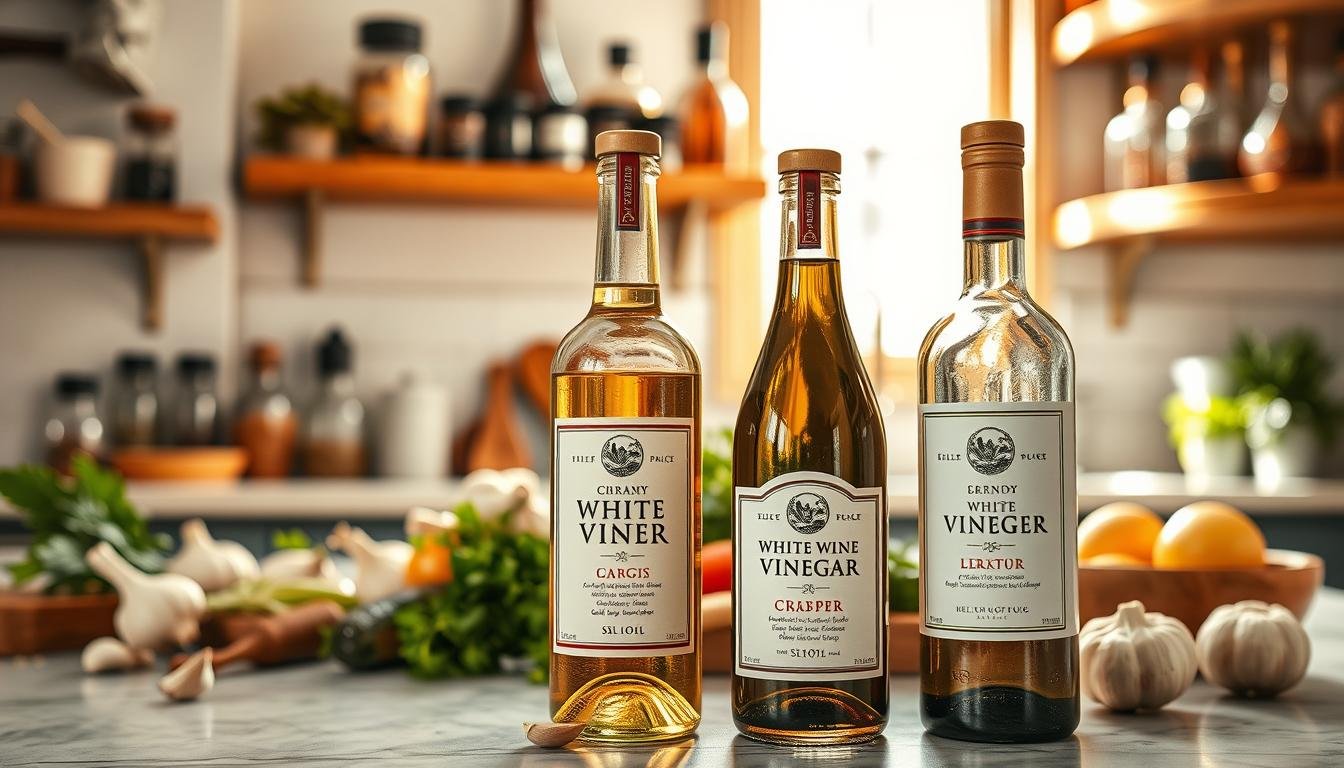
We will compare base ingredients, production, acidity levels, taste, and common uses. Expect practical guidance for salads, sauces, pickling, and household cleaning. We will also note that appearance can help: one bottle looks water-clear, the other can show a pale yellow or cloudiness from grape compounds.
By the end, we aim to tell you which type to keep on hand for cooking or chores. We will flag safety tips for surfaces and offer smart substitutions so you can pick the right ingredient for any recipe or task.
Quick answer: how white wine vinegar and white vinegar differ at a glance
At a glance, these two pantry acids serve different jobs. One is made from fermented grape-based wine and keeps a mild, fruity flavor profile. The other comes from distilled grain alcohol and delivers stronger acidity for tough cleaning.
Key differences include base ingredient, acetic acid level, taste, scent, and appearance. Acidity matters: distilled vinegar can reach roughly 10% acetic acid for stronger antimicrobial action. Wine vinegar usually ranges about 5–7%, so it is gentler for food-contact tasks.
- Flavor and scent: distilled is sharp and pungent; wine-based is milder and slightly fruity.
- Appearance: distilled is crystal clear; wine-based may lean pale yellow or slightly cloudy.
- Use cases: choose wine vinegar for dressings, salads, light sauces, and delicate pickling. Choose distilled for heavy-duty pickling, descaling, and cleaning grime or mold.
| Feature | Wine vinegar | Distilled vinegar |
|---|---|---|
| Acidity | ~5–7% | Up to ~10% |
| Main use | Dressings, cooking, light pickling | Cleaning, strong pickling, descaling |
| Caution | Better for food contact | Avoid in enclosed spaces and on stone/wood |
If you lack wine-based vinegar, rice or Champagne vinegar makes a similar mild swap for recipes. We keep both on hand and pick the product that matches the task’s taste and strength needs.
Is White Wine Vinegar The Same As White Vinegar
Though they may look similar on store shelves, their origin and process make them different. We answer plainly: no, white wine vinegar and white vinegar are not the same.
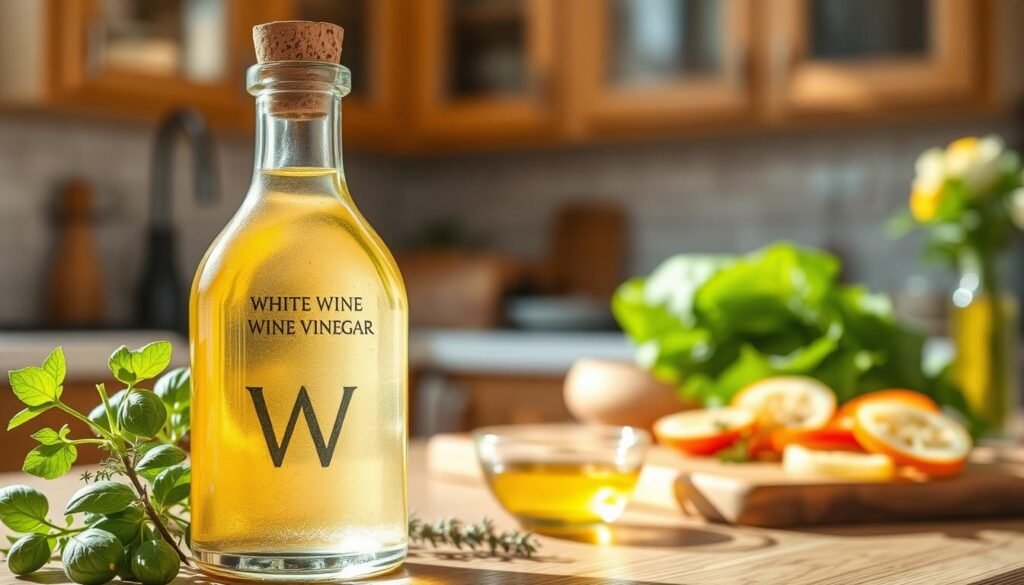
White wine vinegar is vinegar made by converting fermented white wine into a mild, fruity acid. White vinegar comes from fermented grain alcohol and is often distilled for higher acidity and a sharper smell.
- Flavor: wine vinegar adds subtle fruit notes; white vinegar gives a clean, strong sourness.
- Use: choose wine vinegar for dressings and sauces; pick white vinegar for heavy-duty pickling and cleaning.
- Cost and availability: white vinegar is cheaper and sold in bulk; wine vinegar is pricier and sold in smaller formats.
| Feature | Wine vinegar | Grain-based vinegar |
|---|---|---|
| Base | Grapes / white wine | Grain alcohol (ethanol) |
| Acidity & flavor | Mild, fruity; ~5–7% | Stronger, sharper; up to ~10% |
| Best use | Vinaigrettes, delicate sauces | Cleaning, strong pickling, descaling |
Read labels to avoid accidental swaps. We keep both on hand so flavor and function stay reliable in recipes and chores.
Origins and production: wine-based vs grain-based vinegar
Origin tells us much: one starts from pressed grapes, the other from distilled grain alcohol. We follow those paths to see how starting material shapes flavor and strength.
Base ingredient
One type begins with white wine made from grapes. That base keeps subtle fruit notes and varietal character.
The other begins with ethanol made from grain. Distillation gives a neutral, high-acid liquid suited for heavy-duty tasks.
Fermentation and acetic formation
Both are vinegar made by microbes that convert alcohol into acetic acid. Extended fermentation can produce a “mother” of vinegar that seeds new batches.
Appearance cues
Distilled grain-based bottles look crystal clear and almost water-like. Wine-derived bottles often show a faint yellow or slight cloudiness from grape compounds.
- Labels that say “distilled” or “unfiltered” reveal different clarity and flavor.
- Look for “mother” when you want to start your own batch.
| Feature | Wine-based | Grain-based |
|---|---|---|
| Base | Grapes / white wine | Grain alcohol (ethanol) |
| Production note | Oxidized, may be unfiltered with mother | Often distilled for clarity |
| Appearance | Pale yellow or slight cloudiness | Crystal clear, neutral |
| Practical result | Balanced flavor for cooking | Higher acid for cleaning and strong pickling |
Acidity and flavor profile that shape cooking and cleaning
Acidity and aroma decide whether a bottle suits your salad bowl or your mop bucket.
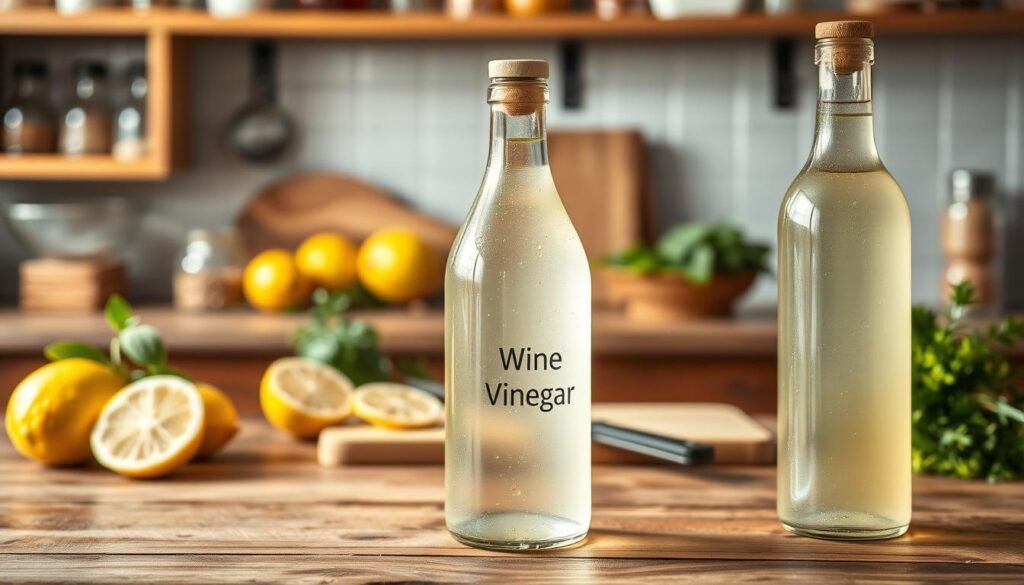
We measure strength by acetic acid percentage. One type usually runs about 5–7% acetic acid, which is gentle on taste and surfaces. The other can reach up to ~10% and gives stronger antimicrobial action and faster descaling.
Taste and scent differ. The milder product shows subtle, fruity flavor from grapes and helps brighten dressings and pan sauces without harsh sourness. The stronger product has a sharp, pungent smell that can linger in small rooms.
Practical takeaways
- For delicate recipes like vinaigrettes and sauces, choose the milder option to preserve balance and aroma.
- For heavy pickling, grout or kettle descaling, pick the higher-acid product for reliable results.
- When odor matters, the fruit-derived aroma helps neutralize kitchen smells, while the pungent acid is best used with ventilation.
| Feature | Milder option (~5–7%) | Stronger option (up to ~10%) |
|---|---|---|
| Acetic acid | ~5–7% | Up to ~10% |
| Flavor profile | Soft, fruity notes | Sharp, pungent sourness |
| Best uses | Dressings, sauces, light pickling | Heavy pickling, cleaning, descaling |
Best uses in the kitchen: dressings, sauces, brines, and pickling
A single splash can change a sauce from flat to bright, so choosing the right bottle matters.
For vinaigrettes and classic emulsions like hollandaise or béarnaise, we reach for white wine vinegar. Its mild, grape-derived flavor supports eggs and butter without sharpness. It helps create stable emulsions and keeps dressings light.
When we deglaze poultry or fish pans, that same vinegar builds immediate brightness. It lifts fond and blends cleanly with butter, herbs, and stock. Pair with tarragon or chives for seafood dressings.
For pickling and brining where color matters, we pick distilled white vinegar because its clear, high-acid profile preserves crisp texture and avoids tinting produce. For milder, slightly sweet swaps, rice vinegar works well. For deeper, robust dressings, red wine vinegar adds character. Apple cider vinegar gives fruit-forward tang in slaws and marinades.
- Use white wine vinegar for vinaigrettes, hollandaise, and delicate sauces.
- Use white vinegar for high-acid pickling that keeps vegetables bright and crisp.
- Swap 1:1 with apple cider or rice vinegar when subtle sweetness or fruit notes are needed.
| Kitchen task | Best vinegar choice | Why |
|---|---|---|
| Vinaigrettes & sauces | White wine vinegar | Mild, fruity flavor; supports emulsions without harshness |
| Deglazing & marinades | White wine vinegar or apple cider vinegar | Brightens pan sauce; adds gentle tang to fish and poultry |
| Pickling & brines | Distilled white vinegar | High acidity and clear color preserve texture and avoid staining |
| Bold dressings | Red wine vinegar | Stronger character for red meat and hearty salads |
Cleaning performance at home: what each vinegar does best
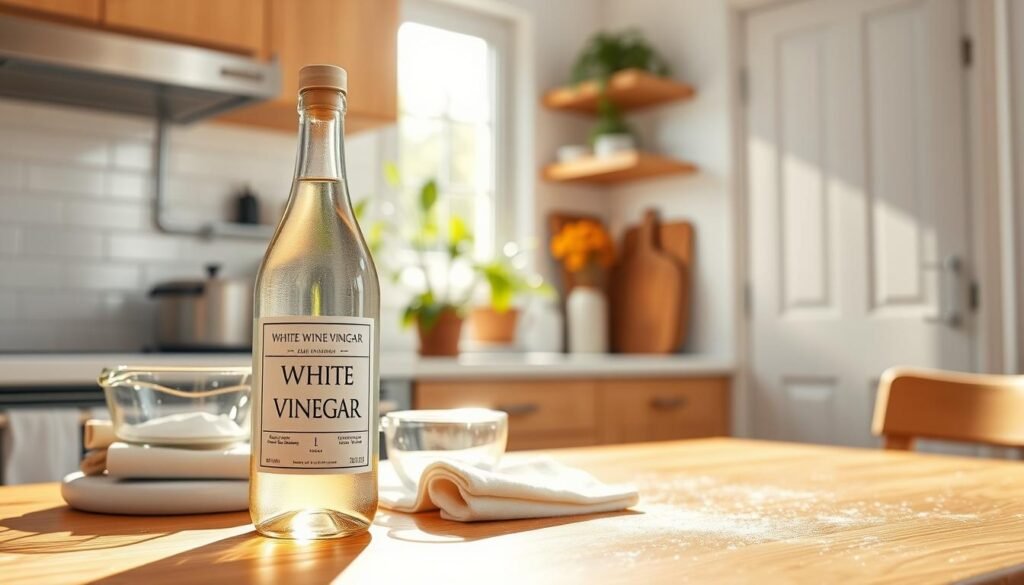
When it comes to household scrubbing and deodorizing, not all vinegars perform the same. We base recommendations on acid strength, scent, and surface safety so you choose the right product for each task.
Antimicrobial potency linked to acetic acid strength
Higher acetic acid gives stronger antimicrobial action. For heavy-duty jobs we reach for white vinegar because it can be up to ~10% acid and kills bacteria and mold more reliably.
Stain and odor removal
Use high-acid for descaling kettles, coffee makers, and stubborn bathroom grime. Pair with baking soda for tougher scrubs.
We prefer white wine vinegar for light stains, routine wipe-downs, and deodorizing ovens or microwaves due to its milder scent and gentler flavor footprint on food-contact surfaces.
Surface compatibility and when to avoid
Avoid both on hardwood and natural stone; acid can etch and dull finishes. Also ventilate when using strong white vinegar in small rooms to reduce fumes.
Test first and dilute as needed to protect finishes and maintain safety.
| Cleaning task | Recommended vinegar | Why |
|---|---|---|
| Descaling appliances | White vinegar | High acetic acid dissolves calcium and mineral build-up |
| Cutting boards & counters | White wine vinegar | Milder scent; safe for food-contact areas when diluted |
| Bathroom mildew | White vinegar | Stronger antimicrobial potency for mold control |
| Oven/microwave deodorizing | White wine vinegar | Gentler odor neutralizer with less pungency |
Smart substitutions if you’re out of white wine vinegar
When we run short of white wine vinegar, a few pantry bottles step in without wrecking recipes. Use a straight 1:1 swap and taste as you go to restore balance.
Rice vinegar is our first pick for mild, slightly sweet swaps. Champagne vinegar offers delicate acidity for seafood and light salads. Red wine vinegar brings bold tang to hearty dressings and red meat dishes. Apple cider vinegar gives a fruit-forward tang that suits slaws and marinades.
- Substitute 1 tbsp rice vinegar, Champagne vinegar, red wine vinegar, or apple cider vinegar for 1 tbsp white wine vinegar.
- Taste and adjust salt or sweetener after swapping to keep flavor harmony.
- Watch color: red wine vinegar may tint pale ingredients.
- Keep several bottles on hand to avoid last-minute store trips.
| Substitute | Flavor note | Best use |
|---|---|---|
| Rice vinegar | Mild, slightly sweet | Vinaigrettes, quick pickles |
| Champagne vinegar | Delicate, refined | Seafood, light salads |
| Red wine vinegar | Robust, tangy | Hearty dressings, red meat |
| Apple cider vinegar | Fruity tang | Marinades, slaws, chutneys |
Cost and availability in the United States
Availability across U.S. supermarkets and online shops is broad for both vinegar types. We find multiple brands on grocery shelves, and most marketplaces stock at least one wine-based option and several distilled choices.
Price differs sharply. Distilled white vinegar usually costs less and appears in gallon jugs at warehouse clubs. That makes it ideal for cleaning and large-batch pickling where volume matters.
By contrast, white wine vinegar carries a higher price. Its fermentation and packaging in smaller bottles push up cost. We reserve it for dressings and dishes where subtle flavor matters.
Look at labels for acidity and bottle size before buying. Seasonal deals, subscriptions, and bulk club packs can lower costs for both types. Balance budget and culinary goals when you stock your pantry.
| Product | Typical sizes | Average US price | Common use |
|---|---|---|---|
| Distilled white vinegar | 16 oz–1 gal | $2–$8 | Cleaning, bulk pickling |
| White wine vinegar | 8–16 oz | $3–$10 | Dressings, delicate sauces |
| Rice / specialty wine vinegar | 8–12 oz | $3–$12 | Asian recipes, mild flavor swaps |
Safety, storage, and labeling tips for everyday use
Good labeling and ventilation cut risks when we use strong cleaning acids at home.
Store bottles tightly sealed in a cool, dark cabinet to preserve flavor and acetic strength. Keep culinary bottles away from heat and direct sunlight to slow oxidation.
Read labels for clues: “distilled” signals a clear, higher-acid product suited for heavy pickling and cleaning. “Unfiltered” or “with mother” usually means more flavor complexity for cooking.
Avoid using acidic solutions on hardwood and natural stone; acid can etch or dull finishes. When we clean with high-strength distilled liquid, ventilate rooms to reduce lingering fumes.
- Verify acidity percentages on the label for consistent pickling and recipe results.
- Decant cooking bottles into smaller containers for frequent use to limit air exposure.
- Label open dates and rotate stock so older bottles are used first.
- Check ingredient lists to spot added flavors or seasonings that affect outcomes.
| Concern | Best practice | Why it matters |
|---|---|---|
| Storage | Cool, dark, tightly sealed | Preserves acid level and flavor for cooking and cleaning |
| Label reading | Check “distilled”, acidity %, and “with mother” | Helps choose the right type for food or cleaning tasks |
| Surface safety | Avoid hardwood and stone; test first | Prevents etching and finish damage |
| Usage safety | Ventilate when using strong distilled acid | Reduces fumes and respiratory irritation |
Side-by-side recap: flavor, acidity, color, cooking, and cleaning
Here’s a compact side-by-side recap to help you match bottle to job quickly.
We compare two common pantry acids. One tops out near ~10% acetic and is clear with a sharp smell, ideal for pickling and tough cleaning. The other runs about 5–7% acetic, carries a mild, fruity taste, and may show a pale yellow haze. Use the higher‑acid product when strength matters.
- Acidity: higher acetic equals stronger antimicrobial and pickling performance; lower acidity preserves delicate flavors.
- Flavor: milder, grape-influenced profile fits dressings, hollandaise, and salad applications; sharper neutral taste suits baking reactions and heavy pickling.
- Appearance: crystal-clear versus faint yellow or slight haze—pick clear for color‑sensitive brines.
- Cleaning: use the stronger option for descaling and grime; use the milder bottle for light wipe-downs and odor neutralizing.
| Feature | Stronger, clear | Milder, grape-based |
|---|---|---|
| Acidity | Up to ~10% acetic | ~5–7% acetic |
| Best cooking uses | Pickling, poaching, baking reactions | Dressings, sauces, delicate brines |
| Cleaning | Heavy‑duty descaling and mold control | Light deodorizing and surface wipe |
Quick subs: rice vinegar for mild swaps, Champagne for elegance, red wine vinegar for robust dishes, and apple cider for fruit-forward tang. Always check labels for acidity and added flavors, and avoid both on hardwood or natural stone. Match acidity, flavor profile, and color to the task for best results.
Our take for home cooks right now
A simple pantry rule helps you pick the right acid for any task.
We recommend keeping both bottles: white vinegar for budget cleaning and dependable pickling, and white wine vinegar for nuanced cooking like dressings, sauces, and delicate pan sauces.
Explore different types—rice, apple cider, or red wine—to broaden flavor without changing technique. Read labels for acetic percent and clarity before you buy or swap.
Store bottles tightly capped in a cool, dark place. Avoid hardwood and natural stone, ventilate during strong cleaning, and taste as you go when seasoning. In short: for flavor finesse choose wine vinegar made from grapes; for strongest acid impact and clear brines choose distilled white vinegar.