What Is Shaoxing Wine
We introduce a classic Chinese rice wine that many home cooks lack but pros use to build authentic restaurant flavor. This amber huangjiu dates back over 2,000 years to Zhejiang and brings mild sweetness, fragrant aromatics, and savory depth to dishes.
Made from glutinous rice, water, and a wheat starter, it usually ages in clay jars and sits around 14–18% ABV. In the U.S., labeled cooking bottles often contain added salt to avoid alcohol tax; unsalted, drinkable bottles appear at liquor stores.
We rely on this ingredient in marinades, stir-fries, sauces, dumpling fillings, and braises to layer umami and lift flavor. Later sections cover history, production, labeling, substitutions, alcohol notes, and storage so readers can shop and use it with confidence.
What Is Shaoxing Wine
In Chinese kitchens, a small pour of amber huangjiu often does more to deepen flavor than hours of simmering.
We call this product the cornerstone chinese rice wine in many pantries, second only to soy sauce for building authentic taste. As a yellow wine from the city shaoxing in Zhejiang, it gains body and color through longer fermentation and jar aging.
Typical alcohol ranges sit around 14–18%, though some bottles run higher. Gentle heat or longer cooking reduces any sharpness, leaving savory, nutty notes that lift garlic, ginger, scallion, and stock-based sauces.
- Uses: quick deglazes in stir-fries, richer braises, dumpling fillings, and pickles.
- Why chefs use it: a splash tamps gaminess, amplifies umami, and brightens aromatics without overpowering.
- Pairing: blends seamlessly with soy sauce and other aromatics for balanced sauces.
| Attribute | Typical Profile | Kitchen Role |
|---|---|---|
| Category | Huangjiu / yellow wine | Depth and body |
| Alcohol | 14–18% (some up to ~25%) | Reduced by cooking |
| Common Uses | Stir-fries, braises, marinades | Neutralize fishy/gamey notes |
Tracing 2000 Years of Tradition: The Story Behind Shaoxing Wine
Across 2000 years, this amber rice beverage traveled from ritual cups to everyday kitchens. We trace its roots to the late Zhou and the Han-era spread that made it common across regions and classes.
From Zhou and Han dynasties to modern culture
Early records note the drink more than two millennia ago. Legends credit the god Du Kang with early innovations, blending myth with early craft.
Customs, legends, and a pantry cornerstone
Families once buried a bottle at a daughter’s birth to open at marriage or graduation. Such customs tied time and quality together, reinforcing the idea that the brew improves with age.
- Late Qing banquets revived prestige and helped cement the drink in refined chinese dishes.
- Political and literary mentions lifted status while cooks made it commonplace for day-to-day cooking.
- Rooted in the city shaoxing, the product shaped flavor across regional recipes and modern chinese food.
Today we still reach for this rice wine when a dish needs depth. Its mix of legend and function keeps it central to our kitchens and menus.
How Shaoxing Wine Is Made: From Rice to Clay Jar
The journey from raw rice to aged bottle reveals the choices that shape aroma and body.
Core ingredients and starter
We start with glutinous rice, water, and a wheat-based qū. The qū converts starch into sugar, and yeast turns that sugar into alcohol.
Some producers add red fermented rice to deepen aroma and color without clouding the final product.
Fermentation and aging
The mash ferments, is filtered, then ages in clay urns for months or years. Clay and local water lend terroir that shapes body and mellow fragrance.
Alcohol, salt, and retail types
Typical alcohol content sits around 14–18%, though some bottles run higher. For export, bottles labeled cooking wine include added salt to change classification and extend shelf life.
Salted versions are engineered for the kitchen; unsalted bottles resemble traditional rice wine meant for sipping.
| Step | Primary role | Kitchen outcome |
|---|---|---|
| Glutinous rice + qū | Saccharification and fermentation | Sweet-umami base for sauces |
| Red fermented rice (optional) | Color and aroma boost | Richer hue, subtle fragrance |
| Clay-jar aging | Mellowing and oxygen control | Rounded body and amber color |
| Added salt (cooking wine) | Tax classification & stability | Best used for cooking, not sipping |
Flavor Profile and Aroma Notes
A small splash from a jar can shift a sauce from flat to layered, revealing grainy sweetness and savory depth.
Our flavor profile centers on mild malty sweetness from glutinous rice, a faint funk from wheat fermentation, and a long, umami finish like mushroom broth and soy.
Nutty and fruity hints—walnut, almond, plum, apricot—rise with warmth and air. These notes help the bottle lift aromatics without masking other ingredients.
Maturity and cooking effects
Longer clay-jar aging deepens color from pale yellow to brown and thickens body. Fragrance grows more integrated, and tastes mellow.
- Rice gives rounded malty sweetness.
- Wheat fermentation adds layered complexity.
- Aged bottles score higher for body and fragrance.
| Characteristic | Typical Note | Kitchen Use |
|---|---|---|
| Sweetness | Malty, rice-based | Balances salty sauces |
| Aroma | Nutty, plum, apricot | Enhances braises and marinades |
| Finish | Umami, mushroom-like | Pairs well with pork and mushrooms |
We always taste a drop before cooking to adjust salt and sugar. Quick heat (deglazing) brightens fruit notes; slow braises deepen umami.
Label Literacy: Names, Types, and Spellings You’ll See
Labels can hide key information that affects how we cook. A quick read tells us whether a bottle is for the pan, the table, or a special dish.
Romanization varies: Shaoxing, Shao Hsing, and Shaohsing point to the same regional style. You may also see huangjiu, the broader yellow wine category that includes these bottles.
- Hua Diao (often aged): higher aroma and body; great for special braises.
- Jia Fan: more rice in the mash; slightly fuller ABV and richer taste.
- “Shaoxing cooking wine”: contains added salt—common at the grocery but not ideal if you want tight control of seasoning.
We prefer unsalted, drinkable bottles so we can manage seasoning across recipes. Many U.S. liquor shops carry these; grocery aisles usually stock the salted, economy types. Brands such as Pagoda offer both options, and some labeled Huang Chiew Rice Wine will perform similarly.
| Label cue | What it means | Kitchen use |
|---|---|---|
| Hua Diao | Aged, aromatic | Special occasion braises, finishing |
| Jia Fan | Higher rice ratio | Richer marinades, deeper stock |
| Cooking wine (salted) | Added salt for classification | Everyday cooking, avoid extra seasoning |
| Unsalted bottle | Drinkable, pure ingredients | Better control of salt; versatile |
Check ingredients: water, rice, wheat are standard. Avoid unnecessary caramel coloring when possible. We recommend keeping one everyday bottle and one Hua Diao for tests so you can compare aroma and cooking performance.
How We Use Shaoxing Wine in Chinese Cooking
A quick pour during a stir-fry is one of our fastest tools to boost depth and aroma. We use this rice wine in simple moves that have big impact across chinese cooking.
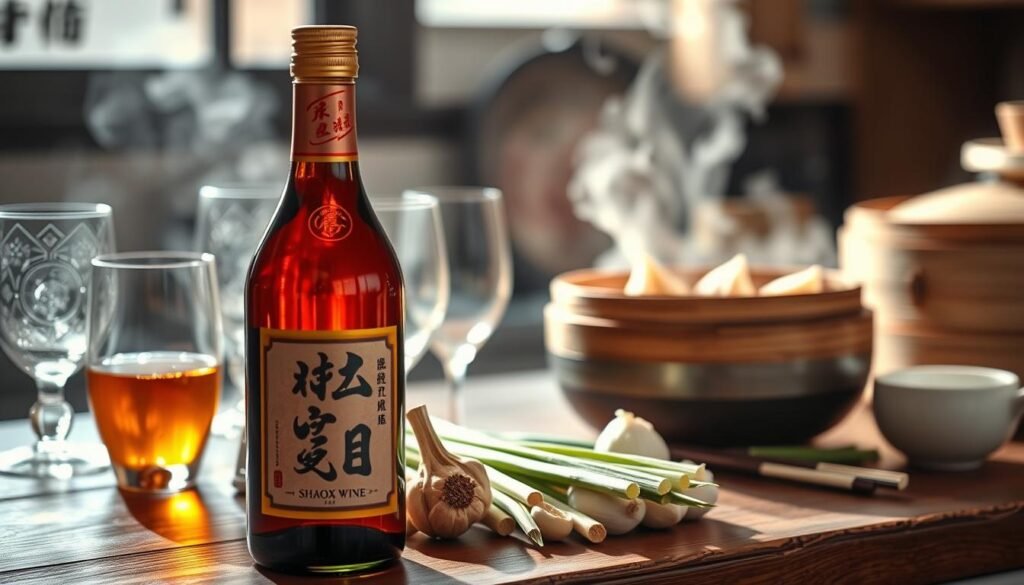
Stir-fries, marinades, and deglazing
For marinades, a teaspoon or two tames gaminess and adds savory lift. For wok work, 1–2 tablespoons deglaze the pan after browning to pull up fond and make glossy sauces.
Pairing and protein balance
We pair it with soy sauce, ginger, scallion, and garlic. That combo builds umami for pork and chicken and cleans fishy notes in seafood.
Amounts and timing for home cooks
- Small marinades: 1–2 teaspoons per pound.
- Stir-fries: 1–2 tablespoons added after searing to deglaze.
- Braises: larger measures—roughly 3/4 cup in classic simmered recipes.
| Technique | When to Add | Kitchen Result |
|---|---|---|
| Blanch with ginger | Before cooking | Reduces fishy/gamey odor |
| Deglaze | After browning | Lifts fond, deepens sauce |
| Finish light | At end | Preserves aroma |
Note: if using salted cooking bottles, cut back on salt to avoid oversalting delicate dishes. When we follow these rules, a measured splash transforms weeknight recipes into restaurant-style dishes.
Signature Dishes That Showcase Shaoxing Wine
A handful of classic Chinese plates depend on a precise splash of amber rice liquor to shape their signature taste. These dishes show how alcohol, aroma, and slow heat work together.
Hong shao rou and braised fish
We spotlight hong shao rou, where the pour infuses pork belly with caramelized umami and depth. For hong shao yu, a generous measure—often about 3/4 cup—creates a glossy, aromatic braise that flatters rich fish.
Drunken chicken and seafood
Drunken chicken uses a chilled brine to showcase the bouquet. Variations with shrimp or crab capture freshness while layering floral, nutty notes.
- Technique: longer simmering integrates complexity without harshness.
- Sides: soy-braised greens or mushrooms echo the savory-sweet profile.
- Bottle choice: try everyday bottles and a Hua Diao to compare aroma in recipes.
| Dish | Role | Portion guidance |
|---|---|---|
| Hong shao rou | Deepen pork richness | 3/4 cup for a 4–6 lb braise |
| Hong shao yu | Glossy, aromatic sauce for fish | About 3/4 cup per recipe |
| Drunken chicken | Perfumed chilled appetizer | 2–4 tbsp in the brine |
Shaoxing Wine vs Other Rice Wines and Spirits
Choosing the right rice ferment changes a dish: sometimes transparency is best, sometimes weight and umami win.
We compare common asian types so you can pick the right match for a recipe. Clear mijiu offers a light, clean profile that suits delicate seafood or lightly sauced vegetables.
Mijiu and lighter rice options
Mijiu is subtle. Use it when you want freshness and no heavy malt notes. It keeps flavors bright without adding depth.
Sake, soju, and mirin notes
Sake can replace stronger bottles in gentle preparations; it’s cleaner and less nutty. Mirin is much sweeter and can skew balance unless we cut added sugar.
Why distilled or cloudy drinks differ
Baijiu is a high‑proof spirit and not a direct culinary match. Makgeolli is milky and effervescent, more for drinking than cooking. Cooking sherry often contains salt; unsalted dry sherry performs closer to an aged rice bottle.
| Type | Profile | Best use |
|---|---|---|
| Mijiu | Light, clear | Delicate seafood, steamed veg |
| Sake | Clean, mild | Poaching, light sauces |
| Mirin | Sweet, syrupy | Glazes, adjust sugar |
| Dry sherry | Nutty, dry | Good substitute when unsalted |
- Choose mijiu for transparency; choose our amber bottle when a savory backbone is needed.
- Always read labels for salt or added sugar to avoid surprising your dish.
Smart Substitutes When You Can’t Use Shaoxing
When the usual amber bottle is missing, a few smart substitutes save the day in a stir-fry or braise.
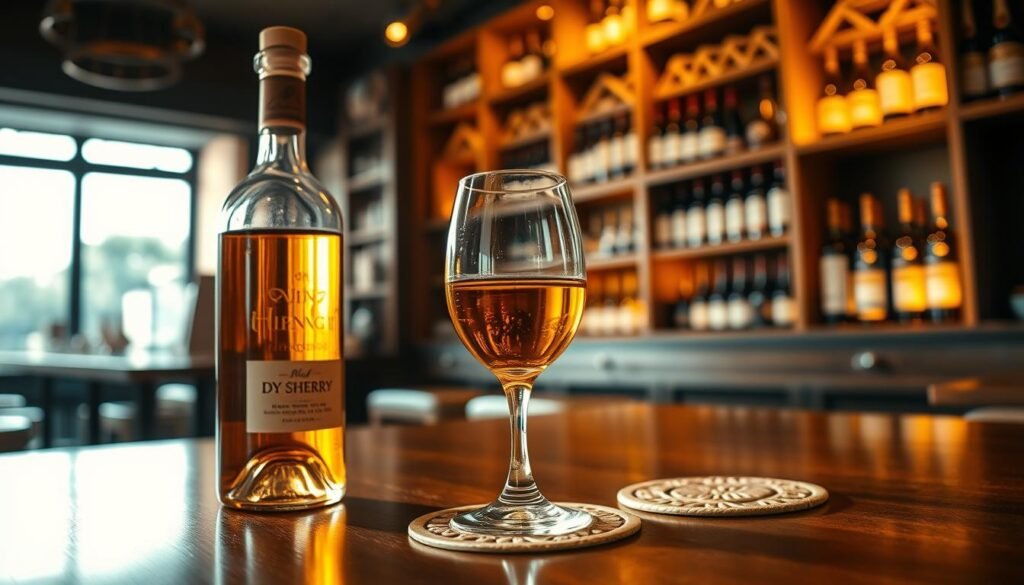
For small amounts (1–2 tablespoons) we treat many swaps as 1:1. Dry sherry ranks highest—choose an unsalted version rather than cooking sherry to avoid surprise salt. Dry white wine and other Chinese rice wine options work well for light sauces and quick deglazes.
Sake and soju fit milder recipes where a lighter profile won’t compete. Mirin is much sweeter; cut or omit added sugar if you use it and expect a different final flavor.
- Non‑alcoholic: chicken, mushroom, or vegetable stock add umami when we avoid alcohol.
- NA beer or wine can work for a tablespoon, but they may contain trace alcohol.
- For under 1 tbsp, plain hot water can deglaze; always taste and adjust salt afterward.
| Substitute | Best use | Notes |
|---|---|---|
| Dry sherry | Stir‑fries, deglazing | Unsalted preferred; closest match |
| Dry white wine | Light sauces, marinades | Good 1:1 swap; cleaner profile |
| Chicken / mushroom stock | Non‑alcoholic braises, quick sauces | Add umami; reduce salt in recipe |
| Mirin | Glazes, finishing | Very sweet—omit sugar or use less |
We recommend noting alcohol content and salt on substitute labels before use. For precision in recipes, keep a small everyday bottle and a higher‑aroma option so you can compare aroma and final plate content.
Buying Guide for the United States
Sourcing an authentic bottle takes a little know‑how, but once you learn where to look shopping gets faster.
We find salted cooking wine in most Asian grocery stores and larger ethnic markets. Those shelves hold economical bottles and gallon jugs for frequent cooks.
Unsalted, drinkable bottles usually appear at liquor or wine shops, though availability depends on state laws. Reputable retailers and online wine shops can ship to many states; always confirm delivery eligibility.
Reading labels and ingredients
Scan for simple ingredients: water, rice, wheat. If the label lists salt, the bottle is likely a cooking product and you should reduce added salt in recipes.
Avoid unnecessary caramel coloring when you can. Brands such as Pagoda are common; try a midrange everyday bottle first, then compare a Hua Diao for special dishes.
Price and format guide
Expect everyday cooking bottles to run about $2–$6. Older, aged Hua Diao will cost more and reward recipes that rely on aroma and depth.
- Buy one everyday bottle for routine use and one Hua Diao for braises or tasting.
- Check multiple spellings on labels: Shaoxing, Shao Hsing, or Hua Diao and huangjiu equivalence.
- Try a different brand if aroma or cook‑down results are flat for your recipes.
| Retail channel | Typical stock | Pros | Cons |
|---|---|---|---|
| Chinese grocery stores | Salted cooking bottles, bulk jugs | Cheap, easy to find, great for everyday cooking | Often salted; fewer aged options |
| Liquor / wine shops | Unsalted, drinkable bottles, Hua Diao | Higher quality, better aroma, suitable for sipping | Higher cost; state shipping limits possible |
| Online retailers | Both everyday and specialty bottles | Wide selection, home delivery | Check shipping rules and extra fees |
Storage, Shelf Life, and Kitchen Tips
A little attention to storage keeps a good bottle performing like new for months after opening. Store unopened bottles in a cool, dark pantry away from heat and strong odors.
Once opened, unsalted bottles remain vibrant for about six months at room temperature. Refrigeration extends freshness up to a year when we use a tight cap and keep the neck clean.
Salted cooking bottles last longer because salt acts as a preservative. Still, we always seal them and avoid pouring leftovers back into the bottle to prevent cross-contamination.
- Seal the cap after every use and wipe the rim before closing.
- Label open dates so we can track aroma and quality.
- Use clean utensils—never dip a used spoon back into the bottle.
| Storage location | Opened shelf life | Practical tip |
|---|---|---|
| Pantry, cool & dark | ~6 months (unsalted) | Keep cap tight and out of direct light |
| Refrigerator | 6–12 months (unsalted) | Best if used infrequently; extends aroma |
| Salted cooking bottle | 12+ months | Salt preserves flavor; still seal and label |
| Unopened bottle | Indefinite (properly stored) | Buy a backup if you cook often |
Aroma is our best test: if the smell turns dull or off, replace the bottle. These small habits keep rice-based alcohol content and flavor steady for reliable cooking results.
Dietary Notes: Alcohol, Gluten, and Cooking for the Family
Understanding alcohol behavior and gluten in the bottle helps us cook for kids and sensitive diners without losing flavor.
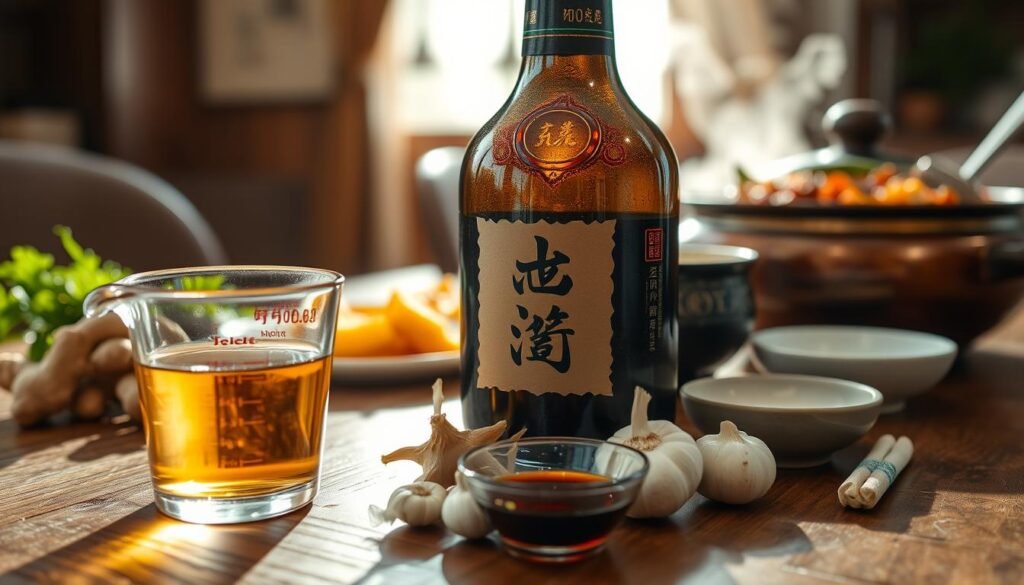
How heat and time affect alcohol
Heat and simmer time change how much alcohol remains in a dish. High-heat stir-fries and quick deglazes shed more of the volatile alcohol than brief finishes.
Most home recipes use 1–2 tablespoons divided across servings, so the per‑portion alcohol content is minimal in many cases.
Gluten and safe swaps
The traditional bottle contains wheat, so it is not gluten-free. We label gluten-containing bottles in shared kitchens to prevent mix-ups.
Dry sherry makes a reliable gluten-free alternative for similar nutty notes. For non‑alcoholic needs, use chicken, mushroom, or vegetable stock and adjust seasoning.
| Option | Gluten | Residual alcohol | Best use |
|---|---|---|---|
| shaoxing wine | Contains wheat | Reduced by cooking; depends on heat/time | Braises, marinades, deglaze |
| Dry sherry | Usually gluten-free | Reduced by cooking | Direct substitute for depth |
| Stock (chicken/mushroom) | Gluten-free | Non‑alcoholic | Family meals, low‑salt diets |
Avoid salted cooking bottles when you need tight sodium control. If alcohol is a concern—pregnancy, medications, or personal preference—talk with a healthcare professional before serving. With mindful swaps and seasoning, we can keep authentic flavor while meeting dietary needs.
Bringing Authentic Chinese Cooking Home
A single well‑chosen bottle can turn weeknight meals into memorable chinese cooking experiments.
Keep two bottles on hand: an everyday bottle for quick marinades and deglazes, and a Hua Diao for showpiece braises like drunken chicken or hong shao classics. Small pours lift stir‑fries and sauces; larger measures shape long braises and rich dishes.
Buy salted shaoxing cooking bottles at Chinese groceries for value, and find unsalted, drinkable bottles at reputable liquor shops for control. Read labels, taste a spoonful before seasoning, and cut salt accordingly when you use shaoxing cooking bottles.
Start small with marinades and pan deglazes, then try a full recipe to see how the bottle changes texture, aroma, and depth. With steady practice, chinese cooking becomes more intuitive and yields restaurant‑quality results.